
Quick Summary
Boat storage protects a vessel during the off-season or between trips, but the right choice depends on boat size, climate, access, security, and budget. This guide compares indoor, outdoor, marina, dry-stack, and at-home storage, explains preparation steps and costs, and answers common storage questions.
Quick Navigation:
- When to Start Looking Into Boat Storage
- How to Store a Boat
- Pros and Cons of Boat Storage Options
- How Much Does It Cost to Store a Boat?
- The Security of Boat Storage
As much as most boat owners would love to use their boats year-round, doing so is unfortunately not an option for many. Whether you're without your own dock or don't want to leave your boat in the water through winter, you'll need boat storage.
There's a lot to consider when storing your boat, from preparing it for storage to your options, costs and security. Learn everything you need to know about storing your boat so you're prepared when the time comes.
When to Start Looking Into Boat Storage
Generally, it is best to start considering storage a few months before you expect to stop using the boat for the season, especially if it is your first time storing the vessel. Popular indoor facilities, dry-stack buildings, and marinas may fill early in areas with short boating seasons.
Timing depends on how often you use the boat and where it stays during the boating season. If you cannot keep it docked between uses, storage should be part of the purchase plan. Buyers can review boat financing options while estimating storage, insurance, maintenance, fuel, and transportation expenses.
Climate also matters. Boaters in mild areas may stay on the water longer, while early freezes in harsher climates make advance winter-storage planning more important. Leave enough time to clean, inspect, service, and cover the vessel before storage.
How to Store a Boat
Normal use, sun, water, salt, moisture, and debris can affect a boat throughout the season. Preparing each major system before storage helps prevent damage and makes spring commissioning easier. Follow the manufacturer’s manual and consult a qualified marine technician for model-specific winterization or service.
Exterior
Thoroughly clean and rinse the exterior with fresh water. Remove algae, salt, dirt, and other buildup from the hull, trim, windshield, fittings, and crevices. After the boat dries, apply appropriate polish or protectant when recommended for the hull material.
Interior
Dampness can lead to mold, mildew, odors, and damaged upholstery. Clean and dry the cabin and storage areas before the boat is closed for the season.
- Open hatches, lockers, holds, and compartments so air can circulate when the storage arrangement allows it.
- Clean and dry cushions, life jackets, ropes, and other moisture-prone equipment.
- Remove food, trash, valuables, and electronics that should not remain aboard.
- Use ventilation or moisture-control products that are appropriate for the space and storage conditions.
Engine
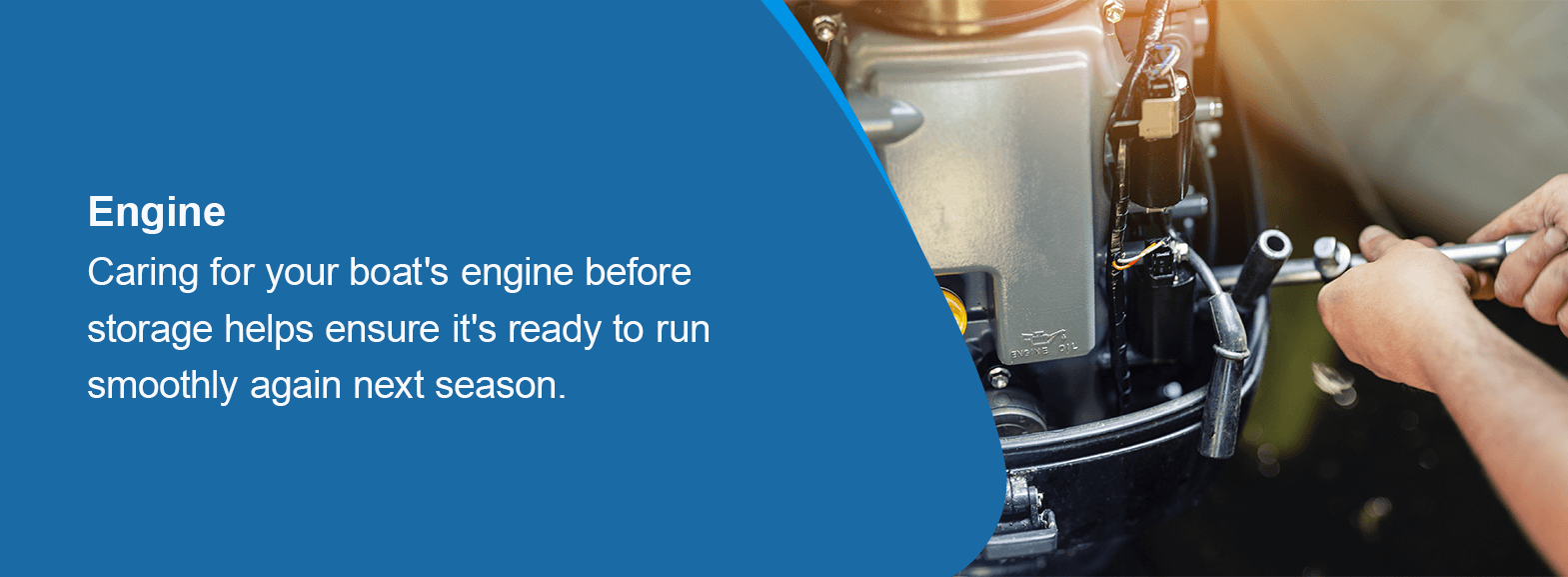
Engine-storage procedures vary by propulsion system and climate. Follow the manufacturer’s maintenance and winterization instructions, which may include changing oil and filters, treating the cooling system, stabilizing fuel, fogging certain engines, protecting exposed metal, and inspecting belts, hoses, connections, and the propeller. A marine technician can complete the process when you are unsure about any step.
Fuel System
Consult the boat and engine manuals for the correct fuel-storage procedure. Recommendations can differ by tank material, fuel type, engine, climate, and storage length. Use the specified stabilizer when required, run it through the system as directed, and leave the fuel level recommended by the manufacturer rather than relying on a universal rule.
Inspection
Inspect the battery, bilge, drain plugs, electrical connections, hoses, moving parts, safety equipment, trailer, and cover. Repair loose, worn, leaking, or damaged components before storage. Batteries may need charging, disconnection, or removal according to the manufacturer’s directions and the storage environment.
A seasonal boat maintenance checklist can help organize these steps and document completed service.
Pros and Cons of Boat Storage Options
The best boat storage option depends on the vessel’s dimensions, your location, climate, access needs, transportation plan, and budget. Large boats have fewer choices, and freezing conditions may rule out in-water storage unless the marina and vessel are equipped for it.
Keep these factors and more in mind as you consider these types of boat storage and how they'd work for you.
Indoor Storage
Indoor storage generally offers the strongest protection from sunlight, precipitation, wind, and temperature swings. It may cost more and can be difficult to reserve in high-demand areas, but it can reduce weather exposure and simplify long-term protection.
1. Indoor Self-Storage
A sufficiently large indoor self-storage unit can protect a trailered boat from weather and allow access according to facility hours. Availability, door dimensions, turning space, trailer length, and fire or fuel policies must be confirmed before signing an agreement.
2. Dry Stack Storage
Dry-stack facilities store boats on racks inside a warehouse and use a forklift to launch or retrieve them. The arrangement protects the vessel from weather and is often located near the water. Size limits, launch notice, retrieval hours, and peak-season wait times vary by facility.
3. Your Garage
Storing a small boat in a suitable garage or barn can minimize monthly fees and keep the vessel nearby. Measure the boat, trailer, motor position, door opening, and turning clearance. Local codes, homeowners association rules, ventilation, fuel policies, and insurance requirements may apply.
Outdoor Storage
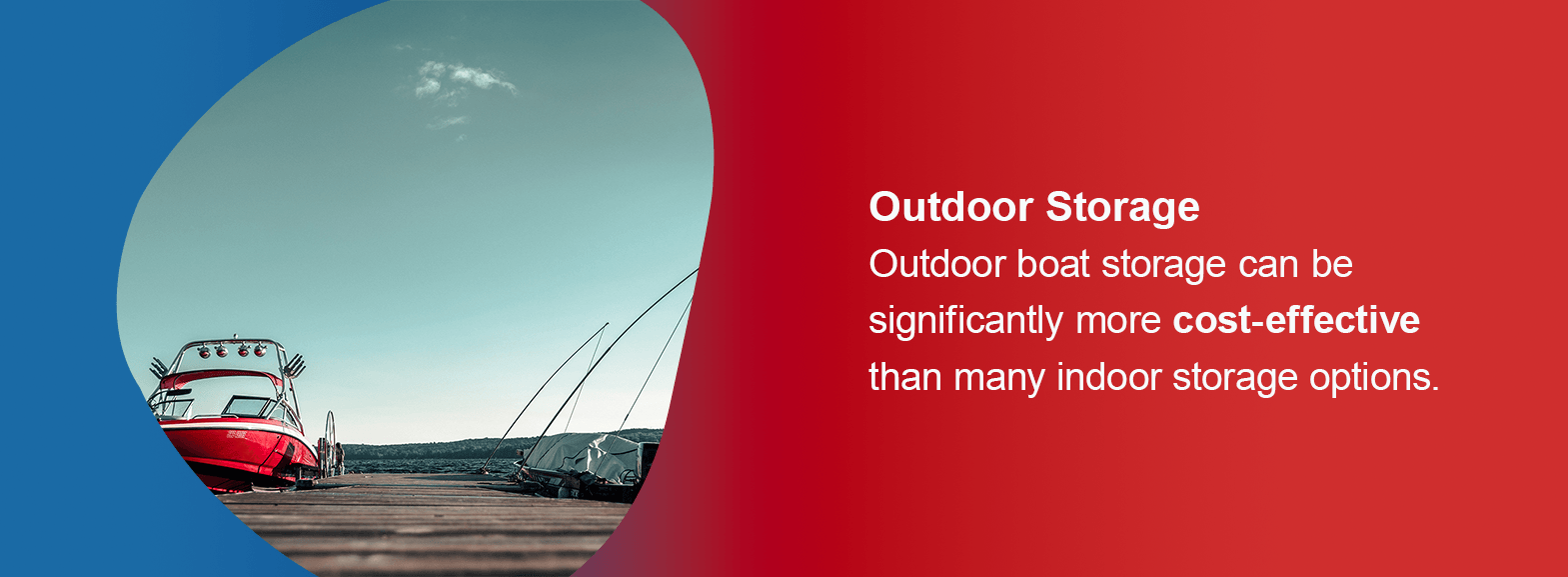
Outdoor storage is often easier to find and less expensive than indoor space. It can work for large boats and trailers, but the vessel needs a fitted cover, proper support, drainage, ventilation, and weather-appropriate preparation.
1. Marina
A marina slip offers convenient access for boaters who use the vessel frequently. Pricing and services vary, and long-term exposure to water, sunlight, growth, storms, and freezing temperatures can increase maintenance. Review dock security, utilities, insurance, storm policies, and seasonal restrictions.
2. Outdoor Self-Storage
Outdoor storage yards may offer open parking, assigned spaces, covered parking, fencing, lighting, and surveillance. Ask about access hours, surface drainage, trailer requirements, security procedures, liability, and restrictions on maintenance work at the property.
3. Your Driveway or Yard
At-home outdoor storage may avoid monthly fees and make the boat easy to access. However, zoning, homeowners association rules, insurance, space, appearance, security, drainage, and weather exposure must be considered. A quality cover and trailer lock are especially important.
How Much Does It Cost to Store a Boat?
Boat storage prices vary widely based on location, vessel length and height, storage type, season, access, utilities, security, transportation, and included services. Local quotes are more useful than a single national average because prices can differ substantially between markets and facilities.
Facilities may charge by month, season, or linear foot. Indoor storage and premium marinas usually cost more than uncovered outdoor parking, while at-home storage may have little direct monthly cost but still requires a trailer, cover, security equipment, and adequate property space.
What's Included in Boat Storage Costs?
Some facilities only rent space, while others bundle services. Compare the full agreement rather than the base price alone. Possible add-ons or included services may include:
- Boat pickup, launching, hauling, or transportation.
- Shrink-wrapping or fitted seasonal covers.
- Battery care, winterization, preventive maintenance, and spring commissioning.
- Wash-downs, bottom cleaning, utilities, trailer parking, or concierge access.
- Security monitoring, gate access, insurance requirements, and storm preparation.
The Security of Boat Storage
A boat is a major investment, so storage security deserves careful review. Ask about fencing, lighting, gate controls, staff presence, cameras, alarm systems, visitor logs, fire protection, storm procedures, and the facility’s insurance and liability terms.
Remove valuables before storage and photograph the boat’s condition and inventory. If the boat remains on a trailer, use appropriate hitch, coupler, wheel, or trailer locks. Review customer feedback and ask other boaters about the facility’s reliability and access practices.
Explore Boat Financing With My Financing USA

If you are planning to purchase a boat, include storage in the total ownership budget before choosing a vessel. My Financing USA helps qualified applicants explore boat loans through a nationwide lender network. Rates, terms, fees, loan availability, and approval depend on the applicant, the boat, and lender requirements. Apply online when you are ready to review available financing options.
To find out if you qualify, fill out our online application or contact us for more information about our financing process.
Additional Resources on Boating:
- Best Places to Go Boating
- Best Boating Activities
- Boat Safety Tips
- Boat Safety Tips for Kids
- What to Bring on a Boat Trip
- How to Rent a Boat Slip
FAQs:
How much does boat storage cost per month?
Monthly pricing depends on location, boat dimensions, indoor or outdoor placement, marina services, season, and included maintenance. Uncovered parking may be relatively inexpensive, while indoor, dry-stack, or premium marina storage can cost substantially more. Request itemized local quotes for an accurate comparison.
What are the different types of boat storage options available?
Common choices include indoor self-storage, dry-stack storage, a garage or barn, uncovered or covered outdoor storage, marina slips, and at-home driveway or yard storage. Each option differs in protection, access, transportation, security, and cost.
Is indoor or outdoor boat storage better for long-term protection?
Indoor storage usually offers better protection from sun, rain, snow, wind, and temperature swings. Outdoor storage can be more affordable and easier to find, but the boat needs appropriate preparation, ventilation, support, and a fitted cover.
How should you prepare your boat for storage to prevent damage?
Clean and dry the interior and exterior, follow manufacturer instructions for the engine and fuel system, inspect batteries and electrical components, remove valuables and moisture-prone items, repair damage, service the trailer, and install a suitable cover. Professional winterization may be appropriate in freezing climates.
Can you store a boat at home or do you need a storage facility?
Many owners store smaller trailered boats in a garage, barn, driveway, or yard. Confirm available space, zoning, homeowners association rules, insurance, security, drainage, and fuel or fire requirements before choosing at-home storage.
What factors affect the price of boat storage?
The largest factors include boat length and height, location, storage type, season, duration, climate control, marina access, security, utilities, transportation, and bundled maintenance services.
Is marina storage worth the cost compared to other options?
Marina storage can be worthwhile for boaters who value fast water access, dock services, and less trailering. It may cost more and expose the boat to water and weather, so compare convenience with maintenance, security, storm, and insurance considerations.
How do you choose the best boat storage facility for your needs?
Confirm the facility can accommodate the boat and trailer, then compare protection, access hours, retrieval procedures, security, drainage, insurance requirements, customer reviews, contract terms, total cost, and included services. Visit the property before committing when possible.