

Quick Summary: November is an ideal month to repower your boat, with access to model-year clearance pricing, open marina service bays, and relaxed installation timelines before the spring backlog hits. Swapping an aging two-stroke or tired inboard for a modern, fuel-efficient four-stroke outboard restores reliability and can boost resale value. Specialized marine brokers like My Financing USA make repowering more accessible with loan options starting at $10,000, terms up to 20 years, and credit scores as low as 550, so you can bundle the engine, digital controls, and labor into one predictable monthly payment.
Why is November the tactical sweet spot for a boat engine repower?
November is a prime window for repowering because marine service yards have their lowest backlog of the year after fall haul-out, while engine manufacturers roll out off-season incentives to clear outgoing inventory.
Since November is when many boaters winterize, technician availability opens up. In spring, technicians are often behind on the influx of boats needing service or being bought for the season, which can delay your launch. Repower over the winter and technicians can give your vessel their full attention, so your boat is more likely to be water-tested and ready on the first warm spring day.
Many inboard and outboard manufacturers use November to clear warehouse space for the upcoming model year, releasing factory incentives and extended warranty packages that are rarely available during peak spring sales. Authorized dealers often pair these rebates with their own off-season discounts to keep certified technicians busy through slower winter months. Securing an engine before year-end lets you lock in equipment savings and favorable terms before annual manufacturer price increases take effect.
How does modern four-stroke power transform fuel economy and vessel reliability?
Replacing aging two-stroke outboards or carbureted inboards with electronic fuel-injected four-stroke power cuts fuel burn and eliminates smoky exhaust and hard seasonal starts. Older carbureted engines waste fuel through unburned exhaust and struggle with cold starts and vapor lock. Moving to a modern engine restores turnkey confidence every time you turn the key, so you can venture farther without second-guessing your fuel reserves.

Upgrading to a modern four-stroke delivers three major on-water improvements:
Fuel Efficiency & Expanded Cruising Range: Modern electronic fuel injection and precise combustion control can deliver a 30% to 50% improvement in fuel economy over legacy two-stroke engines. Lower gallons-per-hour consumption reduces seasonal operating costs and extends your range between fuel dock visits.
Turnkey Reliability & Digital Helm Integration: Onboard computers monitor fuel pressure, intake temperature, and engine health in real time, delivering instant, automotive-style starts with no manual choke. Upgrading to electronic fly-by-wire controls replaces stiff mechanical cables with smooth shifting and precise throttle response.
Quiet Operation & Odor-Free Comfort: Four-stroke valvetrains and tuned exhaust systems dramatically reduce low-end engine noise and idle vibration. Eliminating oil injection removes the pungent two-stroke exhaust fumes that can make passengers queasy during slow trolling or long dock maneuvers.
What rigging, controls, and transom updates are required during an engine swap?
A thorough repower involves more than bolting a new motor to the transom. It requires evaluating your boat’s structural integrity, modernizing your steering, and upgrading your helm gauges. Boating Magazine’s repower guide is a helpful overview of what the process involves.
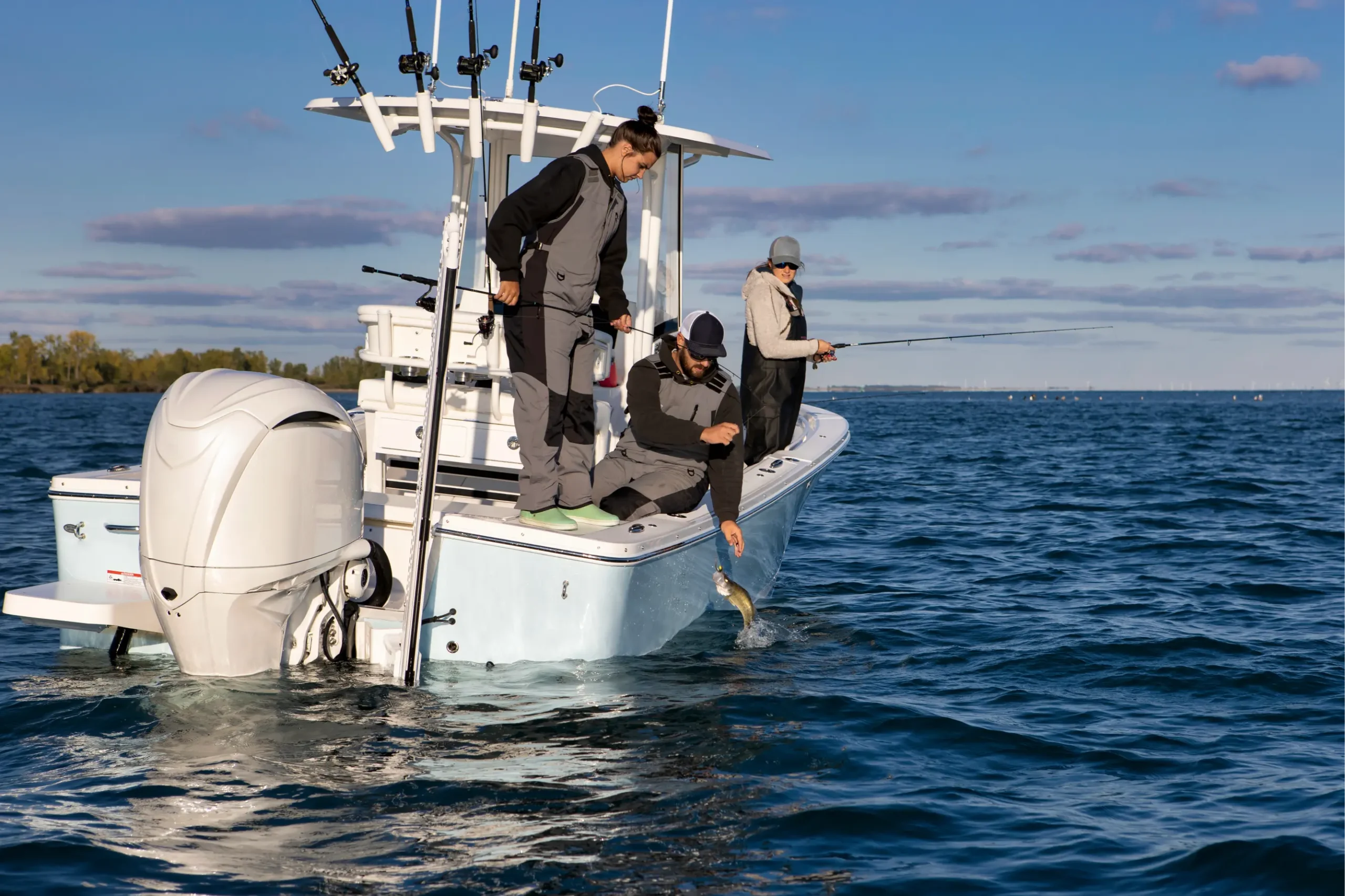
Transom Inspection & Reinforcement: Check your wood or composite transom core for moisture intrusion and stress cracking, and confirm it’s rated for the new engine’s weight.
Digital Rigging & Controls: Upgrading from mechanical push-pull throttle cables to fly-by-wire digital throttles, electronic shift controls, and NMEA 2000-compatible multifunction displays helps your boat perform at its best.
Steering & Fuel Feed Systems: Assess hydraulic steering rams, helm pumps, fuel lines, and high-flow fuel-water separator filters to make sure they meet the new engine’s fuel-demand specifications.
Should you repower your current hull or purchase a new boat entirely?
Repowering is often the most practical option when you own a solid hull with a deck layout you love, giving you near-new reliability without the cost of a showroom purchase. You also keep the boat you already know, quirks and all, which skips the learning curve of a new vessel. If your boat’s stringers, bulkheads, and cockpit design still suit your lifestyle, hanging modern power on the transom essentially resets the clock. An honest look at your current boat’s condition helps determine whether an engine swap delivers more value than buying new.
Weigh these factors to decide whether an engine replacement or a trade-in is your best path forward:
Structural Soundness & Hull Sentiment: When your transom core is dry, your stringers are solid, and the deck layout fits your family’s routine, an engine upgrade rejuvenates the boat you already know and trust. Keeping your hull avoids the learning curve, storage changes, and new insurance policy that come with switching to an unfamiliar vessel.
Reliability Without New-Boat Depreciation: Fresh four-stroke power dramatically reduces the risk of mechanical breakdowns and restores dependable turnkey performance. This targeted refresh preserves your capital while avoiding the steep depreciation new boats take the moment they leave the dealer lot.
When Hull Replacement Makes More Sense: Investing in new propulsion makes little sense if your hull has saturated foam cores, extensive fiberglass delamination, or widespread structural rot. When the cost of repairing hull defects rivals the cost of the motor itself, trading into a clean pre-owned or new boat is the smarter long-term move.
How can you finance and structure an off-season repower?
Partnering with a specialized broker like My Financing USA lets you secure flexible boat financing for your engine swap instead of paying out of pocket all at once. Standard lenders often hesitate to finance major marine equipment upgrades or standalone mechanical improvements, leaving boaters with limited options. An experienced broker gives you access to lending programs suited to major boat projects, keeping your upgrade manageable and your savings intact. Estimate your monthly payment with our boat loan payment calculator.
Program APRs are based on credit score, amount financed, down payment, age of unit, state of residence, and loan term, among other factors. Rates are subject to change at any time.
Ready to upgrade your boat with reliable modern power before spring? Applying for a marine loan with My Financing USA takes just five minutes.
Frequently Asked Questions
In most cases, yes. A new four-stroke engine can increase both the appraisal and resale value of your boat, since buyers prioritize modern engine reliability, transferable warranties, and fuel efficiency over hull age.
Yes. You can secure specialized marine financing using your boat’s clear title as collateral, which lets you bundle the new engine, gauges, steering components, and dealer rigging labor into one simple loan.
We can work with credit scores as low as 550. Our programs are designed to help customers across a wide range of credit situations, including those with past credit challenges.
We offer loan terms of up to 20 years, giving you the flexibility to choose a repayment schedule that works best for your budget and goals.
Our loans start at $10,000. This applies to both dealer and private party purchases.
Rates range from 5.99% to 19.95%, depending on factors like your credit history, loan amount, and other qualifications.
We finance both dealer and private party purchases and can approve loans for LLCs, trusts, and full-time RVers. We do not finance park models or schoolies.
Yes. We offer financing options designed for full-time RVers and boaters.