

options like travel trailers, fifth wheels, and motorhomes, shoppers have multiple considerations to choose from when making their decision. This guide maps each type of RV to the ownership scenario where it performs best and explains the financial mechanics that most buyers overlook.
What Types of RVs Are There? (And Why the Differences Matter)
The RV market divides into two categories: towable RVs and motorized RVs. Understanding this distinction shapes every other decision.
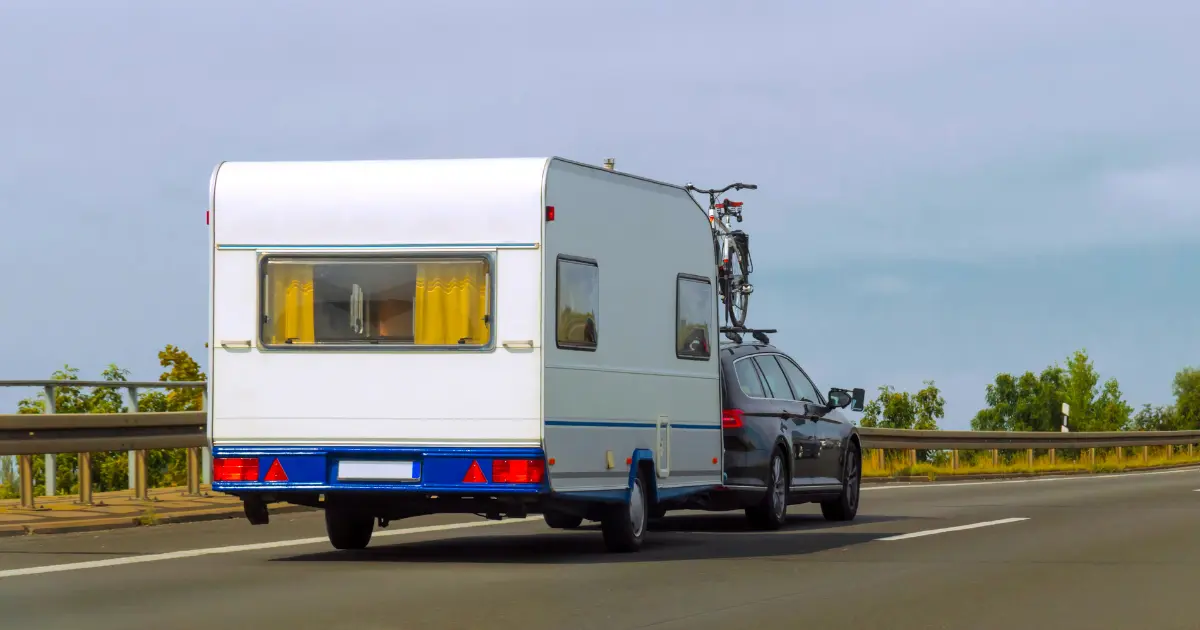
Travel trailers hitch to a truck, SUV, or capable crossover via a ball and hitch system. Entry-level models start around $15,000; well-equipped mid-range trailers run $35,000 to $65,000. Because the trailer and tow vehicle are separate, you can sell or upgrade each independently.
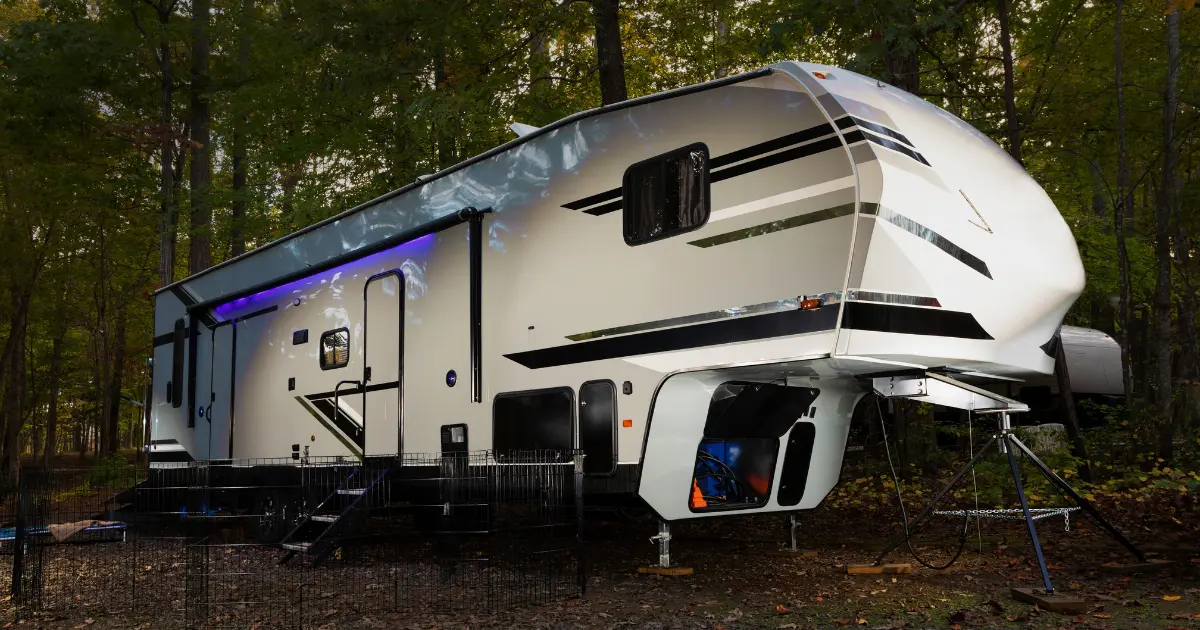
Fifth wheels connect to a specialized hitch mounted in a pickup truck bed, creating a more stable towing configuration. They typically start around $30,000 and commonly exceed $80,000 for residential-quality models. They offer more interior height and multi-room floor plans that resemble an apartment more than a camper.
Motorhomes integrate the living space and engine into a single unit. Class A motorhomes range from $100,000 to over $300,000. Class C models, built on a truck or van chassis, run $80,000 to $160,000. Class B campervans start around $60,000. Maintenance costs and operational complexity are higher than towables, but so is travel convenience.
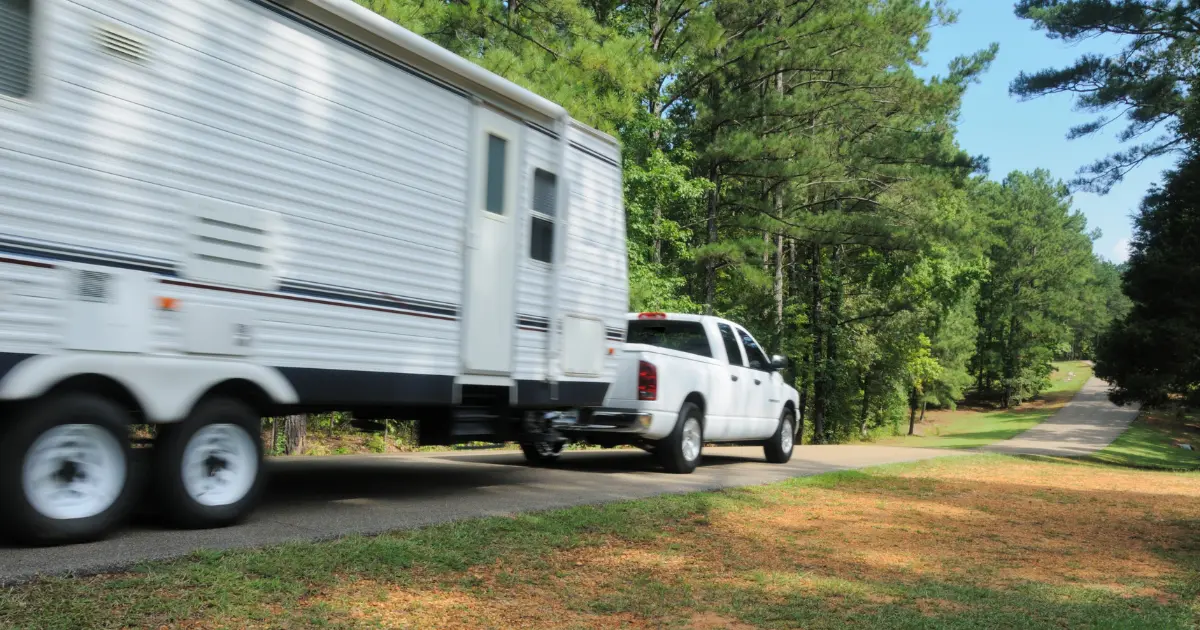
Travel Trailer vs Fifth Wheel vs Motorhome: What's the Real Difference?
The most practical differences come down to how you move, how you set up, and what breaks.
Driving vs towing. A motorhome means operating a large vehicle in traffic, campground loops, and gas stations. Travel trailers and fifth wheels transfer the driving burden to your tow vehicle but add the complexity of backing, maneuvering, and monitoring trailer behavior.
Flexibility. Travel trailers and fifth wheels let you disconnect and use your tow vehicle for local errands. With a motorhome, you either tow a small secondary vehicle (which adds cost and complexity) or drive the motorhome everywhere.
Maintenance. Travel trailers and fifth wheels have no drivetrain to maintain. Motorhomes require engine service, transmission maintenance, and heavy-vehicle tires, all of which cost more per service interval than comparable work on a passenger vehicle.
Which RV Is Best for Beginners?
"Beginner-friendly" is most usefully defined as lower financial exposure and simpler ownership mechanics.
By that measure, travel trailers are the most forgiving entry point. Lower purchase prices mean less capital at risk. If the purchase turns out to be a poor fit, the loss on resale is smaller. They're also towable with a wider range of vehicles, so buyers aren't locked into a specific truck configuration.
Fifth wheels are a reasonable step up for buyers who already own a capable full-size pickup. Motorhomes carry the highest financial risk for a first purchase. Steep early depreciation and higher operating costs make a poor-fit motorhome purchase a more difficult resale situation than a lightly used travel trailer.
Is a Fifth Wheel Better Than a Travel Trailer?
The case for a fifth wheel is strongest when stays are long, comfort matters more than price, and the buyer already owns a qualifying pickup truck. The bi-level floor plan creates a distinct bedroom area separated from living space, something most travel trailers can't replicate at any price.
The case against is equally clear when the buyer doesn't own a full-size pickup, trips are short and frequent, or the budget is constrained. A full-size pickup capable of towing a heavy fifth wheel adds $45,000 to $70,000 to the effective purchase cost if not already owned. For weekend campers, the upgrade rarely earns its cost. For those planning extended or full-time use, it usually does.
Which RV Is Best for Full-Time Living?
Fifth wheels perform best for full-time use by most objective measures. Residential floor plans, higher ceilings, and separated living areas create a comfort level that travel trailers rarely match. The ability to unhitch the truck for daily use is a significant practical advantage.
Travel trailers work for full-time living at lower price points, but the compromises accumulate over time. High-mileage full-time use can accelerate wear on components designed for occasional use.
Motorhomes offer the most travel convenience for full-timers who move frequently. The tradeoff is higher operating cost and the need to either tow a secondary vehicle or move the entire rig for local errands, which increases both cost and complexity.
At My Financing USA we have programs to make make your Full-Time RV living dream a reality.
Should You Buy a New or Used RV?
New RVs carry manufacturer warranties and known ownership history. They also carry early depreciation that can leave buyers in a negative equity position within the first year or two. A buyer who finances with 10 to 15 percent down can find the loan balance exceeds market value within 12 to 18 months.
Used RVs in the 3 to 7 year range have absorbed most of their early depreciation, offering more stable asset value. A pre-purchase inspection by an independent RV technician (typically $200 to $400) is a worthwhile investment for any used purchase above $25,000. A $50,000 budget also reaches significantly higher-quality used units than new ones in the same range.
How to Choose the Right RV for Your Situation
A clear decision framework simplifies the final choice.
Choose a travel trailer if your priority is flexibility and cost management, your trips vary in length, or you're uncertain whether extended use is realistic for your lifestyle.
Choose a fifth wheel if you already own a full-size pickup, comfort during extended stays is a priority, and you're willing to invest more upfront for a better long-term experience.
Choose a motorhome if your travel style prioritizes movement over staying, you value spontaneous stops without the complexity of towing, and your budget supports the operating costs of a motorized unit.
Budget constraints should be treated as a real input. If financing a fifth wheel and a qualifying truck simultaneously strains household finances, the travel trailer option preserves the stability that keeps people using and enjoying their RV long-term.
The Mistake Most First-Time Buyers Make
The most common error is optimizing for the unit rather than the system that can be sustained. This plays out as buying a fifth wheel without factoring in the truck payment, stretching loan terms to afford a motorhome that exceeds realistic usage, or choosing a layout based on a showroom tour rather than how the RV will actually be used.
Underestimating carrying costs is the second most common mistake. Storage, insurance, maintenance, and fuel often total $3,000 to $8,000 per year depending on unit type and usage. A purchase decision made with full cost visibility is one that holds up over time.
Frequently Asked Questions
What is the easiest RV to tow or drive? Travel trailers under 6,000 lbs are generally easiest for new towers. For motorized RVs, Class B campervans are the easiest to drive and park due to their standard vehicle footprint.
How do costs compare across RV types? Travel trailers carry the lowest entry and operating costs. Fifth wheels cost more and require a full-size truck. Motorhomes have the highest long-term operating costs due to fuel consumption and drivetrain maintenance.
What does a truck need to tow a fifth wheel? Most fifth wheels require a three-quarter-ton or one-ton pickup with a fifth-wheel hitch installed in the bed. Always verify the truck's towing capacity and payload rating before purchasing.
Do RVs hold their resale value? All RVs depreciate. Travel trailers and fifth wheels depreciate more slowly than motorhomes, particularly in the early years. Buying used past the steepest part of the depreciation curve improves your eventual resale position.
What is the best RV for long-term value? Long-term value is better measured as value per use than resale price alone. An RV used regularly over 7 to 10 years generates more return on the investment than one used a few times before selling.
Can I live in an RV full-time to save money? It depends on the market. Monthly campground or RV park fees ($500 to $1,500) plus loan payments, insurance, and maintenance can approach apartment costs in many areas. The lifestyle tradeoffs are often as significant as the financial ones.
FAQs:
What is the minimum credit score required to qualify for a loan?
We can work with credit scores as low as 550. Our programs are designed to help customers across a wide range of credit situations, including those with past credit challenges.
How long are the loan terms available?
We offer loan terms of up to 20 years, giving you the flexibility to choose a repayment schedule that works best for your budget and goals.
What is the minimum loan amount I can apply for?
Our loan starts at $10k. This applies to both dealer and private party purchases.
What interest rates do you offer?
What types of purchases are eligible for financing?
We finance both dealer and private party purchases and can approve loans for LLCs, trusts, and full-time RVers. We do not finance park models or schoolies..
Can I finance and RV or boat if I'm a full-time traveler?
Yes. We offer financing options designed for full-time RVers and boaters.