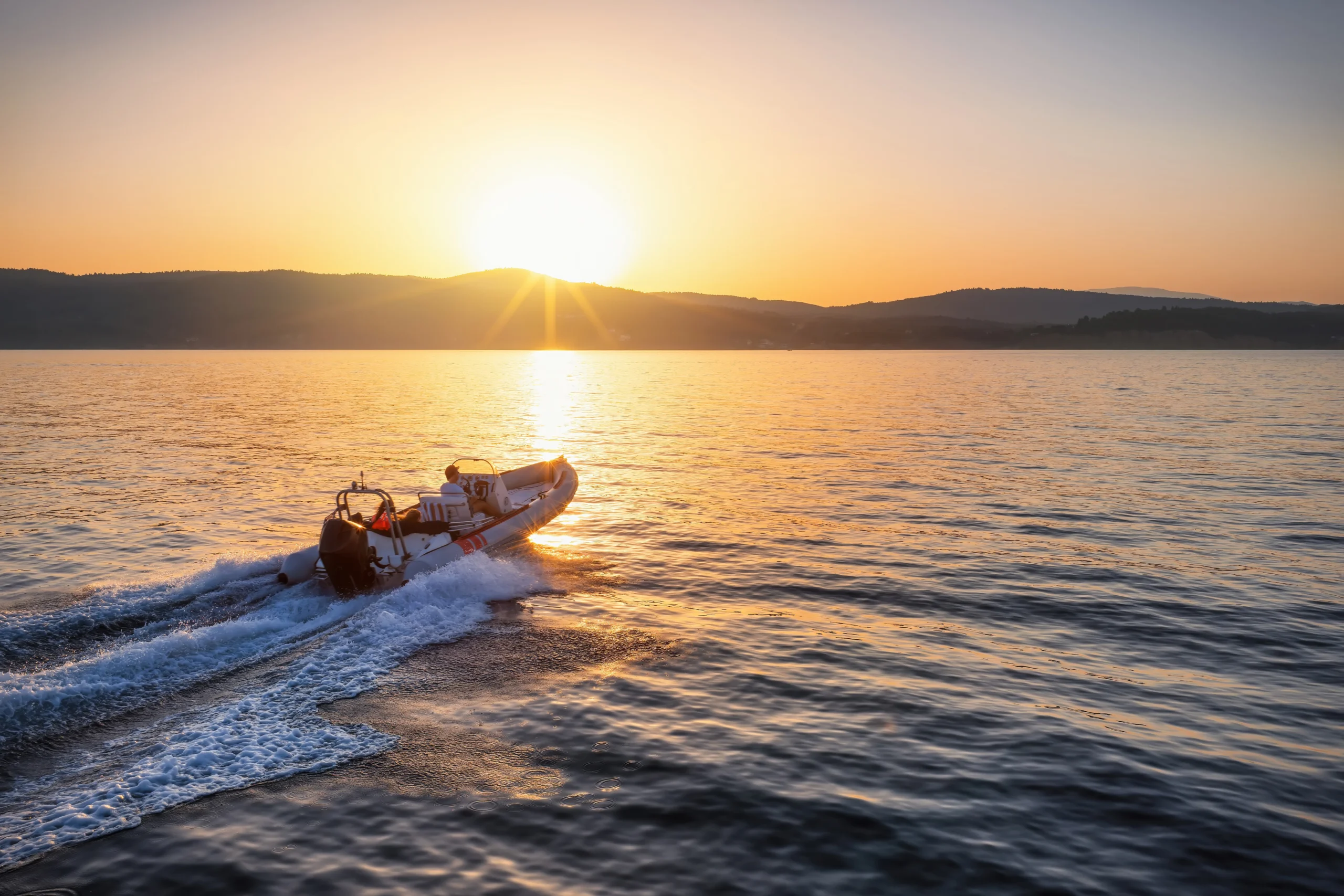
Quick Summary: Choosing between a modern pontoon and a fiberglass deck boat comes down to how your family plans to use the water. Pontoons offer unmatched deck space, exceptional stability, and comfortable lounging for large groups, making them ideal for casual cruising and sandbar gatherings. Deck boats deliver higher top speeds, sharper V-hull handling, and superior watersports performance for wakeboarding and tubing. Securing flexible marine financing through a nationwide broker lets you lock in low monthly payments for new or pre-owned models, giving you the freedom to choose the ultimate family vessel without overextending your budget
Pontoons rely on two or three aluminum logs, or tubes, to float high above the water, whereas deck boats feature a traditional fiberglass V-hull expanded forward to maximize deck space. Understanding how these distinct hull structures slice through water helps you choose the right boat for your body of water, intentions, and boating style.
The structural engineering behind each hull creates completely different performance dynamics on the lake:
- Aluminum Pontoon & Tritoon Tubes: Standard pontoons use two parallel aluminum tubes that provide exceptional surface buoyancy and lateral stability. Modern tritoons add a third center tube, creating extra lift and structural rigidity that allow the boat to plane faster and carry larger, higher-horsepower outboard engines.
- Flared Fiberglass V-Hulls: Deck boats combine the deep-V entry of a traditional bowrider with a widened, flared bow deck. This fiberglass hull cuts directly through waves rather than riding over them, delivering a sporty, responsive ride that leans naturally into tight turns.
- Flat-Deck Architecture vs. Molded Bilges: Pontoon tubes support a completely flat, elevated aluminum frame covered by marine plywood or composite decking, eliminating interior floor steps. In contrast, deck boats feature a single molded fiberglass liner with integrated floor storage lockers and deeper interior gunwales.
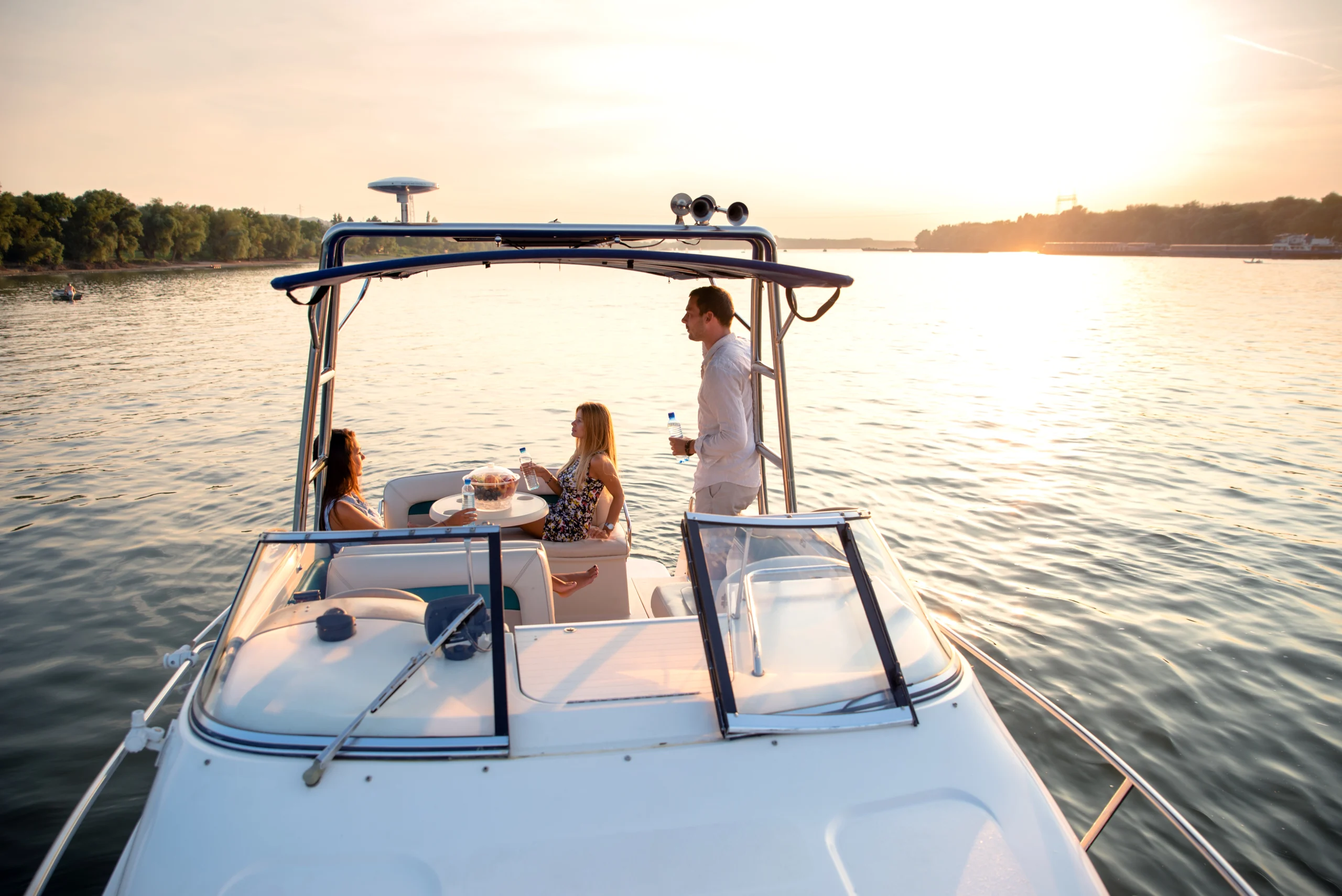
Which vessel offers better seating, deck space, and passenger comfort?
Pontoons deliver unmatched passenger capacity, open floorplans, and perimeter seating that allow large families to move around comfortably while underway or anchored. Since a pontoon's deck extends fully to the outer edges of the aluminum tubes, there are no narrow walkways or cramped corners that restrict movement.
Comparing interior layouts helps determine which one fits your family's social style:
- Lounge Layouts & Social Zones: Pontoons feature expansive wrap-around couches, plush rear loungers, dual bimini tops, and rear swim platforms that create a mobile living room on the water. This open setup makes pontoons the undisputed kings of sandbar gatherings and casual lake cruising.
- Deep Gunwales & Molded Cockpits: Deck boats utilize contoured bow seating, molded fiberglass helm stations, and integrated stern swim steps. The deeper fiberglass gunwales surround passengers with high interior sidewalls, providing extra security for families traveling with young children or pets.
- Capacity & Weight Distribution: A 22-to-25-foot pontoon often accommodates 12 to 16 passengers without feeling crowded, whereas an equivalent-length deck boat usually caps comfortable capacity around 10 to 12 people due to its tapered bow configuration.
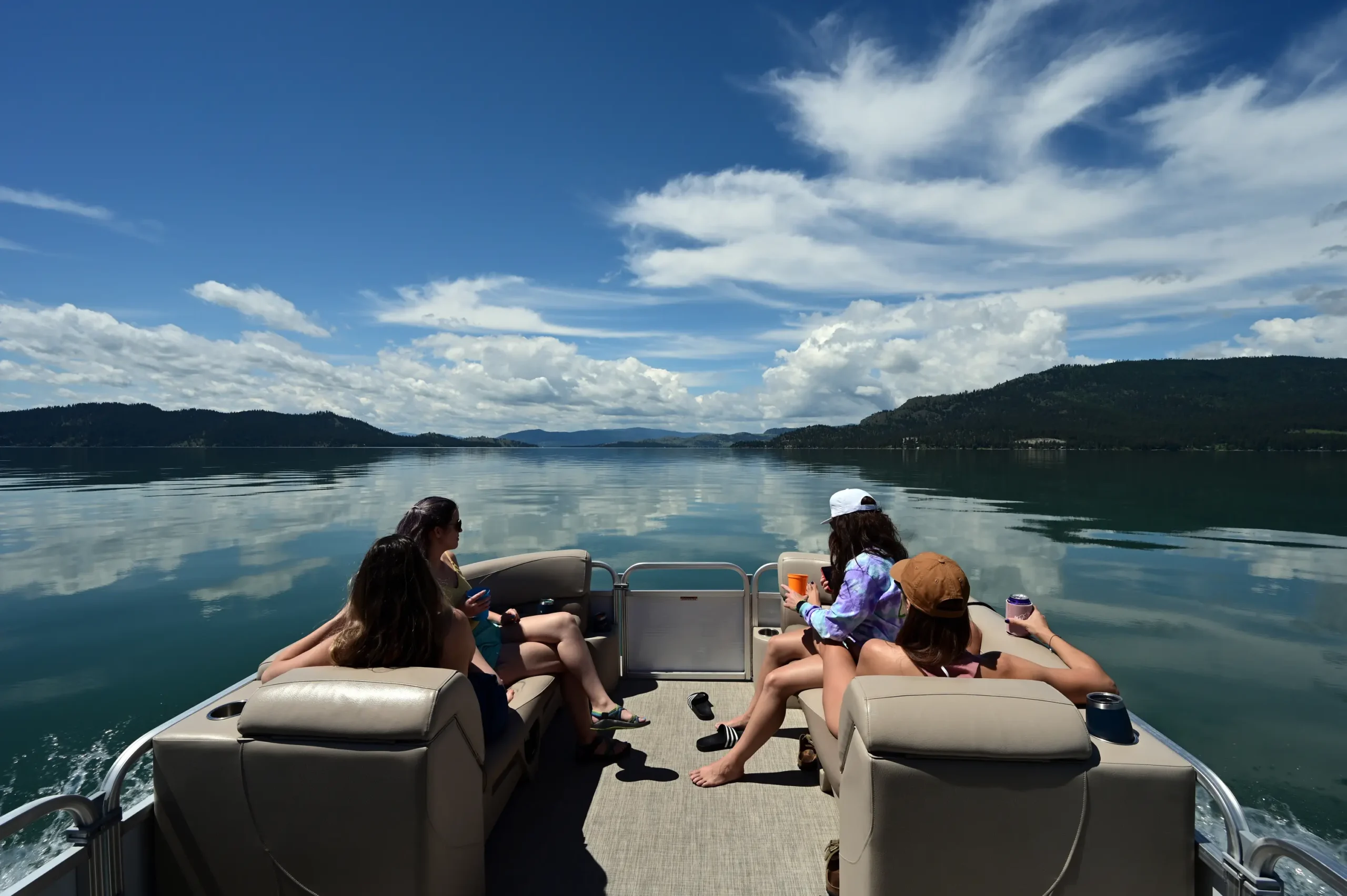
How do speed, handling, and watersports performance compare?
Deck boats excel in top-speed efficiency, quick hole-shot acceleration, and sharp cornering, making them the superior choice for towing wakeboarders, tubers, and skiers. The hydrodynamic shape of a fiberglass V-hull provides an immediate bite in the water when you push the throttle forward or turn the steering wheel sharply.
Evaluating how each boat handles on the water reveals key performance differences:
- Agile Cornering & Acceleration: A deck boat banks naturally into turns just like a traditional fiberglass runabout, maintaining momentum and pulling power during tight watersports maneuvers. The sharp hull entry also helps the vessel pop up on plane quickly, even when loaded with passengers.
- Tritoon Performance Upgrades: While traditional twin-tube pontoons turn flat and push wide in sharp turns, modern tritoons equipped with lifting strakes and performance skins bank inward like a fiberglass boat. Pairing a tritoon with a 200-to-300-horsepower outboard creates an agile watersports machine capable of reaching speeds over 40 mph.
- Wake Creation & Towing Setup: Deck boats naturally displace more water to create clean, shaped wakes for wakeboarding or kneeboarding. Pontoons produce a flatter, wider wake that is ideal for smooth tubing and casual waterskiing, especially when fitted with a stern tow tower or ski-tow bar.
Which boat is better suited for shallow water and rough lake chop?
Modern tritoons slice through heavy lake chop with minimal roll, while deck boats offer deeper draft capabilities and V-hull designs that cut cleanly through ocean swells and coastal waves. Choosing between them depends largely on whether you navigate shallow inland coves or rough, open bodies of water.
Operating conditions vary significantly based on hull depth and buoyancy characteristics:
- Shallow-Water Access: Aluminum pontoon logs float extremely high in the water column, allowing you to trim up the outboard engine and glide into skinny water, sandbars, and shallow coves without scraping bottom. Deck boats require deeper water clearance due to their fiberglass V-hull draft, making careful navigation necessary around underwater hazards.
- Rough-Water Handling: When wind-driven chop creates rolling waves across large lakes, a deep-V deck boat uses its heavy fiberglass hull to cut through the waves, keeping spray out of the cockpit. However, tritoons handle chop remarkably well by bridging the tops of waves across three aluminum logs, offering a surprisingly dry and smooth ride.
- Dockside & Anchor Stability: Pontoons remain virtually flat and stable when passengers walk from port to starboard, eliminating the sudden tipping sensation common on smaller boats, which makes them a good option for families with young children. Deck boats lean slightly under uneven weight distribution, though their lower wind profile makes them easier to hold steady during windy dockside maneuvers.

How do maintenance, trailering, and storage requirements differ?
Aluminum pontoons are inherently resistant to beaching scratches and minor impact damage, while fiberglass deck boats require routine hull waxing and careful dock handling to preserve their finish. Factoring in long-term maintenance, trailering logistics, and off-season storage ensures you choose a boat that fits your lifestyle on and off the water.
Ownership duties vary based on the primary construction materials of each platform:
- Hull Care & Durability: Pontoon logs withstand sandy beaches, gravel shores, and minor dock bumps without structural damage, though aluminum requires occasional acid washing to remove oxidation. Deck boats feature high-gloss fiberglass gelcoat that requires regular washing, compounding, and marine wax to prevent fading and chalking from UV exposure.
- Trailering Dynamics: Lightweight aluminum pontoons reduce overall towing weight, but their high, boxy profile acts as a sail in heavy highway crosswinds, requiring a high-clearance scissor or bunk trailer. Deck boats sit lower on traditional drive-on bunk trailers, offering aerodynamic highway towing and easier launching at steep ramp angles.
- Storage & Winterization: Covering a pontoon requires fitting large playpen covers over extensive railing networks, whereas deck boats use snug snap-on cockpit and bow covers. Both platforms require standard engine winterization, though deck boats stored in water slips require bottom paint to prevent marine growth on the fiberglass hull.
How do you finance a family cruiser with low monthly payments?
Partnering with a specialized nationwide broker like My Financing USA allows you to establish your purchasing power and secure flexible marine financing, with loans starting at $10,000 and terms up to 20 years.
Securing your financing before shopping gives you clear budget parameters and maximum negotiating power when evaluating new or pre-owned pontoons and deck boats at dealerships or through private sales. Establishing your loan parameters in advance makes it easy to structure a payment plan that keeps your monthly budget predictable. Whether you are purchasing through a franchise dealership or a private seller, working with an experienced financing specialist ensures a seamless transaction from application to delivery.
My Financing USA gives you access to competitive loan programs tailored to your boating lifestyle. Setting up your financing strategy early lets you purchase with confidence, secure your dream family cruiser, and hit the water with total peace of mind.
Ready to elevate your summer family adventures? Applying for a boat loan with My Financing USA takes just 5 minutes.
FAQs:
Is a pontoon or a deck boat better for first-time boat owners?
Most first-time owners find a pontoon easier to learn on. The flat, stable deck doesn't tip when people move around, and the handling is forgiving when you're docking or anchoring. If your family mostly wants watersports, a deck boat's sharper handling is worth the extra time it takes to learn.
Can you go wakeboarding or tubing behind a pontoon boat?
Yes. Tubing and casual waterskiing work well behind a standard pontoon, especially one with a ski-tow bar or tow tower. For wakeboarding, look at a tritoon with lifting strakes and a 200-to-300-horsepower outboard. Just know it throws a flatter wake than a deck boat's V-hull.
What's the difference between a pontoon and a tritoon?
A standard pontoon floats on two aluminum tubes, and a tritoon adds a third one down the center. That extra tube gives you more lift, a stiffer structure, and room for a bigger engine. Tritoons also get on plane faster, lean into turns instead of sliding wide, and handle lake chop more smoothly.
Which hull costs less to maintain over time?
Aluminum pontoon tubes usually take less work. They shrug off sandy beaches and dock bumps, and they only need an acid wash now and then to clear oxidation. A deck boat's fiberglass gelcoat needs regular washing, compounding, and waxing to keep UV from fading it, plus bottom paint if you keep it in a wet slip.
Can I finance a used pontoon or deck boat?
Yes. My Financing USA finances both new and pre-owned boats, whether you buy from a dealership or a private seller. Loans start at $10,000 with terms up to 20 years, and the application takes about five minutes.