Boating season is officially here, and if you're gearing up to hit the water, there's no better time to brush up on the fundamentals of safe boating than National Safe Boating Week. Held annually during the week leading up to Memorial Day weekend, this nationwide awareness campaign is organized by the National Safe Boating Council and aims to reduce preventable accidents and fatalities on the water.
Whether you're a seasoned captain or a first-time boat owner, a quick refresher on the basics could save your life or someone else's. In this guide, we're covering everything from proper life jacket use to filing a float plan, so you can enjoy the water all summer long with confidence.
What Is National Safe Boating Week?
National Safe Boating Week takes place every year the week before Memorial Day which is the unofficial kickoff to boating season across the country. It's a coordinated effort by boating safety organizations, the U.S. Coast Guard, and state agencies to remind recreational boaters of the simple precautions that prevent the majority of on-water accidents.
For a broader look at how to stay protected year-round, be sure to read our comprehensive Boat Safety Tips guide.
Life Jackets: Your Most Important Piece of Safety Gear
If there's one takeaway from National Safe Boating Week, it's this: wear your life jacket. The U.S. Coast Guard requires that all recreational boats carry one properly fitted, Coast Guard-approved life jacket for every person on board. Vessels 16 feet and longer must also carry a throwable flotation device.
But having a life jacket on board isn't the same as wearing one and that distinction matters enormously in an emergency. Time and again, investigations into fatal boating accidents find that victims were not wearing their life jacket. Here's what to keep in mind:
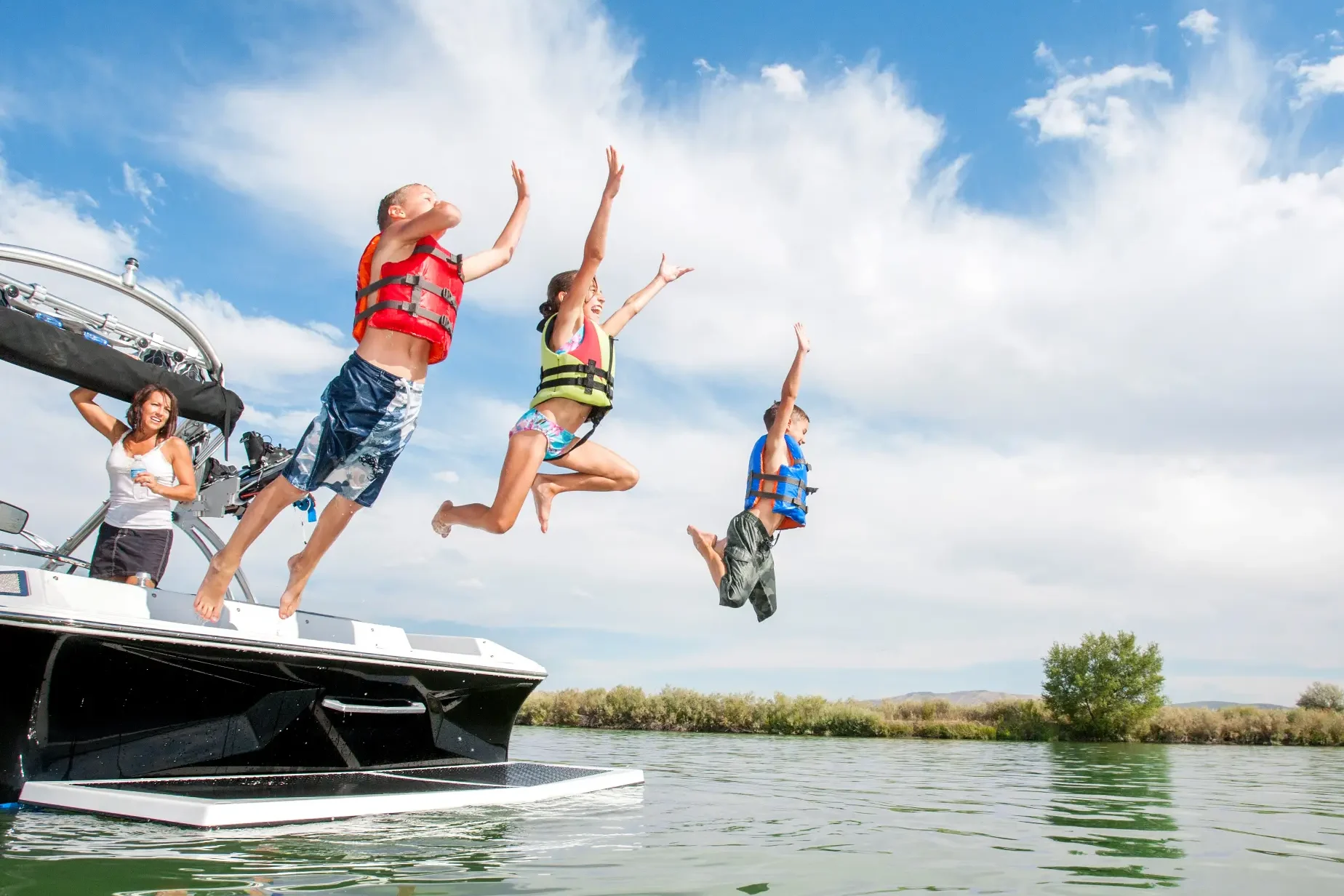
- Fit matters. A life jacket that's too large can slip off in the water. Make sure every person on board, especially children, has a jacket sized specifically for them.
- Inflatables have age restrictions. Only persons 16 years of age or older may use inflatable life jackets.
- Condition counts. Inspect your life jackets at the start of every season. Look for tears, fading, or compromised hardware, and replace any that are damaged.
- Keep them accessible. Life jackets stored at the bottom of a storage compartment won't do much good in an emergency. Store them where they can be quickly grabbed.
No matter what type of vessel you're on, the life jacket rule applies. For more on the gear you need on board before leaving the dock, check out our full Boat Safety Tips article, which includes a complete safety gear checklist.on unit type and usage. A purchase decision made with full cost visibility is one that holds up over time.
File a Float Plan Before Every Trip
One of the simplest yet most overlooked safety habits is filing a float plan. A float plan is a document you leave with a trusted friend or family member on shore that outlines the key details of your trip. If you don't return when expected and can't be reached, that person knows exactly where to direct search and rescue teams.
A complete float plan should include:
- Your name and contact information, as well as that of everyone on board
- A description of your vessel (make, model, color, registration number)
- Your planned departure location and destination
- Your expected return time
- Your vehicle and trailer description and parking location
- The radio channels or frequencies you'll be monitoring
Think of a float plan the same way you'd think about telling someone where you're going before a solo hike. It's a small step that can make a massive difference if something goes wrong.
Check the Weather Every Time
Weather on the water can change faster than on land. What begins as a calm, sunny morning can turn into a dangerous squall within an hour, and the open water offers nowhere to take shelter. Before every outing, check the marine forecast (not just the general weather forecast) for your specific area.
NOAA Weather Radio and apps like Windy or Weather Underground are great tools for boaters. Pay attention to:
- Wind speed and direction. Even moderate winds can create challenging wave conditions for smaller boats, so know your vessel's limits before heading out.
- Thunderstorm warnings. Lightning on the water is extremely dangerous. Head to shore immediately if storms are approaching.
- Fog advisories. Reduced visibility is a serious hazard, especially in busy waterways.
If the forecast looks questionable, it's always better to postpone your trip. The water will be there tomorrow.
General On-Water Safety Tips
Safe boating comes down to a handful of habits that are easy to build. Here are some of the most important ones to keep in mind every time you head out.
Never Boat Under the Influence
Alcohol affects your balance, vision, judgment, and reaction time which are all critical skills when operating a vessel. The effects are also amplified on the water, where sun exposure, motion, wind, and noise accelerate impairment. The safest approach: designate a sober operator for every trip, and save the celebratory drinks for when you're safely back at the dock.
Keep Your Boat Clean and Your Passengers Informed
More mishaps happen on a dirty or cluttered boat. Make it a habit to clean your vessel before and after each outing, check that all equipment is in working order, and make sure your gear is accounted for. Before departing, give every passenger a quick orientation — show them where the life jackets, fire extinguisher, and first aid kit are stored, and make sure they know how to access the boarding ladder and cut the engine in an emergency.
Watch for Signs of Fatigue
Extended time on the water, especially with sun glare, wind, noise, and vibration, can cause disorientation, nausea, and exhaustion faster than most people expect. Check in with your passengers throughout the trip and take breaks when needed. A tired crew is a less safe crew.
Bringing Your Dog? Plan for Their Safety Too
If you're heading out with a four-legged passenger, a little extra preparation goes a long way. Here are the basics of pet safety on the water:
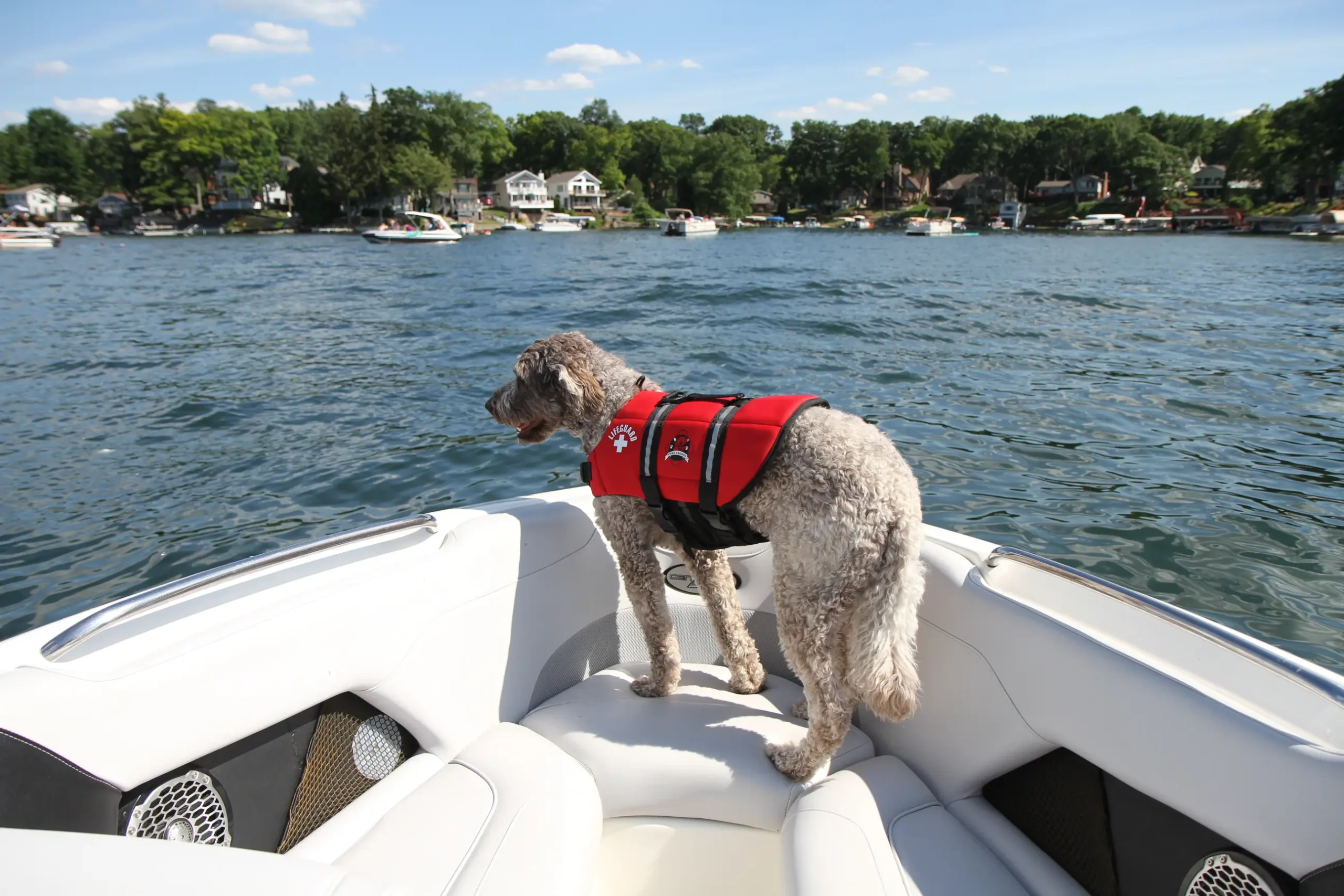
- Get them a properly fitted life jacket. Even strong swimmers can tire out quickly. Canine life jackets are widely available online and in pet stores, just make sure it fits snugly around your dog's torso.
- Bring fresh water and food. Don't let your dog drink from the lake or ocean. Even freshwater can carry contaminants from other vessels. Pack a gallon of clean drinking water and enough food to keep their energy up after swimming.
- Have a plan if they go overboard. If your dog jumps or falls in, resist the urge to jump in after them. Instead, circle back, cut the engine when you're close, and use the handles on their life jacket to lift them back on board.
- Plan for bathroom breaks. Not all dogs are comfortable going on a boat. If yours isn't, schedule regular stops on shore and always bring a leash.
For a deeper dive into on-water safety for both people and pets, our Boat Safety Tips guide covers it all in one place.
Essential Safety Equipment for Every Boat
Beyond life jackets, your boat needs a specific set of safety equipment on board at all times. Think of this as your on-water emergency kit. Before every trip, make sure you have the following:
- Visual distress signals — flares, smoke signals, or electric distress lights depending on your boating area and time of day
- Fire extinguisher — required on boats with enclosed compartments or inboard engines; must be Coast Guard-approved
- Sound-producing device — a horn, bell, or whistle to signal other vessels and alert rescuers
- Navigation lights — required for operating at night or in periods of reduced visibility
- First aid kit — stocked with bandages, antiseptic, pain relievers, and any personal medications
- Marine VHF radio — essential for calling for help when cell service is unavailable
- Anchor and line — to hold your position in an emergency
- Throwable flotation device — required for vessels 16 feet and longer
It's a good idea to walk through this checklist before every trip, not just at the start of the season. Equipment can degrade, batteries die, and flares have expiration dates. For a deeper breakdown of what to pack, our Boat Safety Tips guide includes a comprehensive gear checklist worth bookmarking.
Take a Boating Safety Course
Completing a boating safety course is one of the smartest investments you can make as a boat owner.
The National Safe Boating Council offers a free course that covers navigation rules, emergency procedures, weather awareness, and more. Some insurance providers may even offer discounts for boaters who complete certified safety education.
Whether you're brand new to boating or have years of experience, a course is worth revisiting. Regulations change, new equipment becomes available, and brushing up on the fundamentals is never a bad idea.
Safe Boating Tips for Families and Kids
Boating with children adds an extra layer of responsibility. Kids are naturally curious and active on boats, which means the margin for error is smaller. Here are a few key tips for keeping the whole family safe on the water:
- Children should always wear life jackets — no exceptions, even near the dock or in calm conditions. Make sure the jacket is appropriately sized for their weight and age.
- Establish ground rules before departure. Make sure kids understand they must stay seated while the boat is moving, keep hands inside the vessel, and never lean over the side.
- Designate a dedicated adult to watch children at all times, separate from the person operating the boat.
- Apply sunscreen early and often. Sun exposure on the water is intense, and kids are especially susceptible to burns and heat exhaustion.
- Teach kids what to do if they fall overboard — float on their back, stay calm, and call for help.
For a full breakdown of keeping younger passengers safe, check out our dedicated Boat Safety Tips for Kids guide.
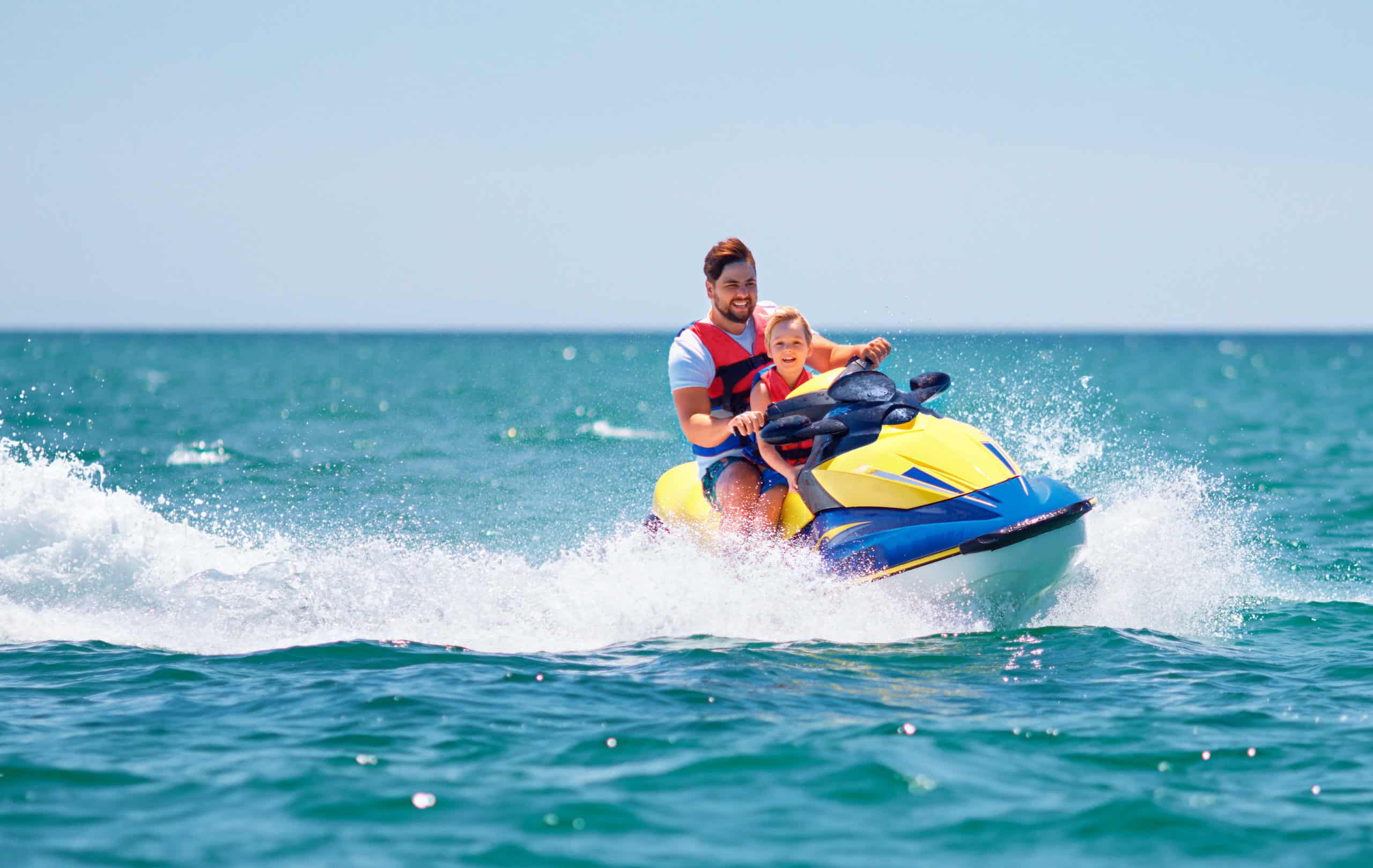
Ready to Find the Right Boat?
Safe boating begins before you ever leave the dock and it starts with choosing the right vessel for your needs. Whether you're drawn to the versatility of a pontoon boat, the speed of a bass boat, or the luxury of a yacht, the type of boat you own plays a big role in how you'll use it and the safety considerations that come with it.
Explore our Guide to the Different Types of Boats to compare your options and find the right fit for your lifestyle and budget.
And when you're ready to make it happen, My Financing USA is here to help you get on the water without the financial stress. We work with a wide network of lenders to find competitive boat loan rates for all credit profiles, from excellent to challenged. Our team does the hard work so you don't have to.
Explore Boat Financing Options →
Fill out our quick application and one of our financing experts will reach out to walk you through your options. There's no obligation, and getting started takes just a few minutes.Happy boating — and stay safe out there.
FAQs:
What is the minimum credit score required to qualify for a loan?
We can work with credit scores as low as 550. Our programs are designed to help customers across a wide range of credit situations, including those with past credit challenges.
How long are the loan terms available?
We offer loan terms of up to 20 years, giving you the flexibility to choose a repayment schedule that works best for your budget and goals.
What is the minimum loan amount I can apply for?
Our loan starts at $10k. This applies to both dealer and private party purchases.
What interest rates do you offer?
What types of purchases are eligible for financing?
We finance both dealer and private party purchases and can approve loans for LLCs, trusts, and full-time RVers. We do not finance park models or schoolies..
Can I finance and RV or boat if I'm a full-time traveler?
Yes. We offer financing options designed for full-time RVers and boaters.