

Most RVers spend thousands on solar panels and lithium batteries and still run out of power before sunset. The bottleneck is rarely generation, but rather management and knowing what every appliance draws, when to run it, and what is quietly bleeding the battery while you sleep.
How do volts, amps, and watts actually work in an RV?
Volts measure electrical pressure, amps measure flow, and watts (volts × amps) measure the actual power being consumed at any given moment. The watt is the only unit that lets you compare a coffee maker to a roof fan to a microwave on equal terms, which makes it the number you build every power decision around.
Most RVs run two separate electrical systems. The 12-volt DC system pulls directly from your battery bank and powers the lights, vent fans, water pump, slide-outs, and the control electronics for things like the fridge and furnace. The 120-volt AC system handles the heavy loads (air conditioner, microwave, hair dryer, standard outlets) and runs off shore power, a generator, or an inverter that draws from your batteries.
Knowing which system an appliance pulls from is the first step. The second is knowing how much it draws in real-world use, which is often quite different from the figure on the spec sheet.
Which RV appliances drain the most power?
Air conditioners, electric water heaters, and residential-style refrigerators are the biggest continuous draws, but phantom loads from TVs, chargers, and the power converter itself often cost more over 24 hours than owners realize.
The high-load appliances
A standard 13,500 BTU rooftop air conditioner pulls roughly 12 to 15 amps at 120V AC while running, which translates to about 120 to 150 amps off a 12-volt battery bank when fed through an inverter. An electric water heater on its 120V element pulls around 12 amps while heating. A residential-style refrigerator runs in the 1 to 2 amp AC range, but it cycles around the clock, so cumulative draw adds up faster than a quick spec-sheet glance suggests.
The phantom loads
Phantom loads are the appliances and circuits drawing power even when you think they are off. Common culprits include the TV in standby, phone and laptop chargers left plugged in, the power converter cooling fan, the propane leak detector, the CO detector, and some CPAP machines that hold a small standby draw.
Individually they are tiny. Stacked over 24 hours they can pull 15 to 25 amp-hours out of a 12-volt bank, which is enough to be the difference between waking up to a half-full battery and waking up to a system in low-voltage protect.
How do you track RV power use accurately?
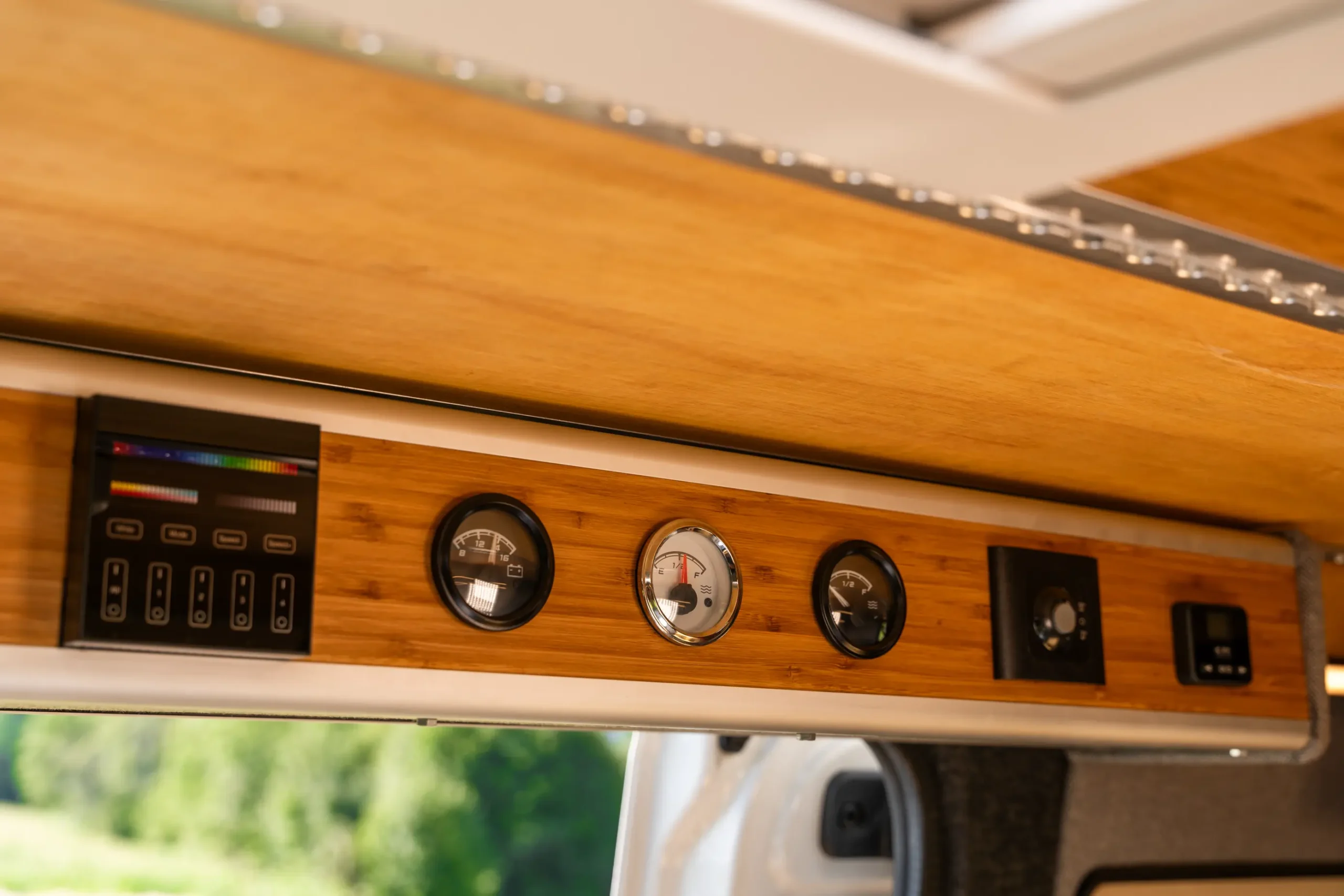
A shunt-based battery monitor, the Victron BMV-712 and Victron SmartShunt are the common references, measures the actual amp-hours flowing in and out of your bank rather than guessing from voltage. This matters most on lithium batteries, which hold a nearly flat voltage from 100% down to about 10% state of charge and then drop off a cliff.
Your built-in RV control panel almost certainly shows voltage and maybe a four-bar battery icon. That is fine as a glance, useless as a planning tool. A real monitor reads in real time how many amps you are consuming, how many amp-hours remain, and roughly how long until you hit the floor you have set. Installation typically takes 30 to 60 minutes, and the hardware runs under $250.
Several monitor systems now mirror the in-RV display through a phone app, so you can check state of charge from a restaurant a mile away from the rig without making a trip back.
How do you build a daily amp budget?
List every appliance you plan to run, multiply each one's draw by the hours you expect to use it, total the amp-hours, and compare the total to your usable battery capacity typically 80% of rated capacity on lithium and around 50% on lead-acid.
A representative day in a boondocking trailer with a 12V compressor fridge might look like this:
- 12V refrigerator: ~5A average × 24 hours = 120 Ah
- LED interior lights: 1A average × 4 hours = 4 Ah
- Roof vent fan: 1A × 8 hours overnight = 8 Ah
- Water pump: 5A × 15 minutes total = 1.25 Ah
- Laptop and phone charging through the inverter: 10A × 2 hours = 20 Ah
- Phantom loads: ~1A continuous × 24 hours = 24 Ah
That totals roughly 177 amp-hours per day, which means a single 100Ah lithium battery is not enough for off-grid use without a daily recharge source, and even a 200Ah bank leaves very little margin. Doing the math before the trip is what separates a comfortable weekend from a 3 a.m. low-voltage alarm.
A few habits cut the budget meaningfully without any new hardware. Switching incandescent bulbs to LEDs drops lighting draw by 80% or more. Pre-cooling the refrigerator on shore power before departure means it spends less time recovering from a warm start. Killing phantom loads at the breaker overnight reclaims 15 to 25 amp-hours a day. Running high-draw appliances during peak solar hours, when your panels are actively replacing what you use, costs you nothing from the bank.
What can modern technology do for RV energy management?
Smart inverter/charger systems balance shore power, generator, battery, and solar inputs automatically, pulling from the most efficient source available and switching seamlessly as conditions change. Several 2026 model-year RVs ship with integrated energy dashboards on a single touchscreen, showing solar input, battery state of charge, inverter load, and individual circuit draws in one view.
Third-party monitoring platforms can also push real-time alerts to your phone like when a battery is below 30%, microwave drawing more than its expected baseline, solar input dropped to zero at noon (which usually means a tripped breaker or a leaf on the panel). For RVers who want diagnostics rather than just status, some monitors log historical data so you can scroll back through a week of trips and see exactly when and where your power went. That is the difference between guessing why you ran out and knowing.
What should you look for in an RV's power system before you buy?
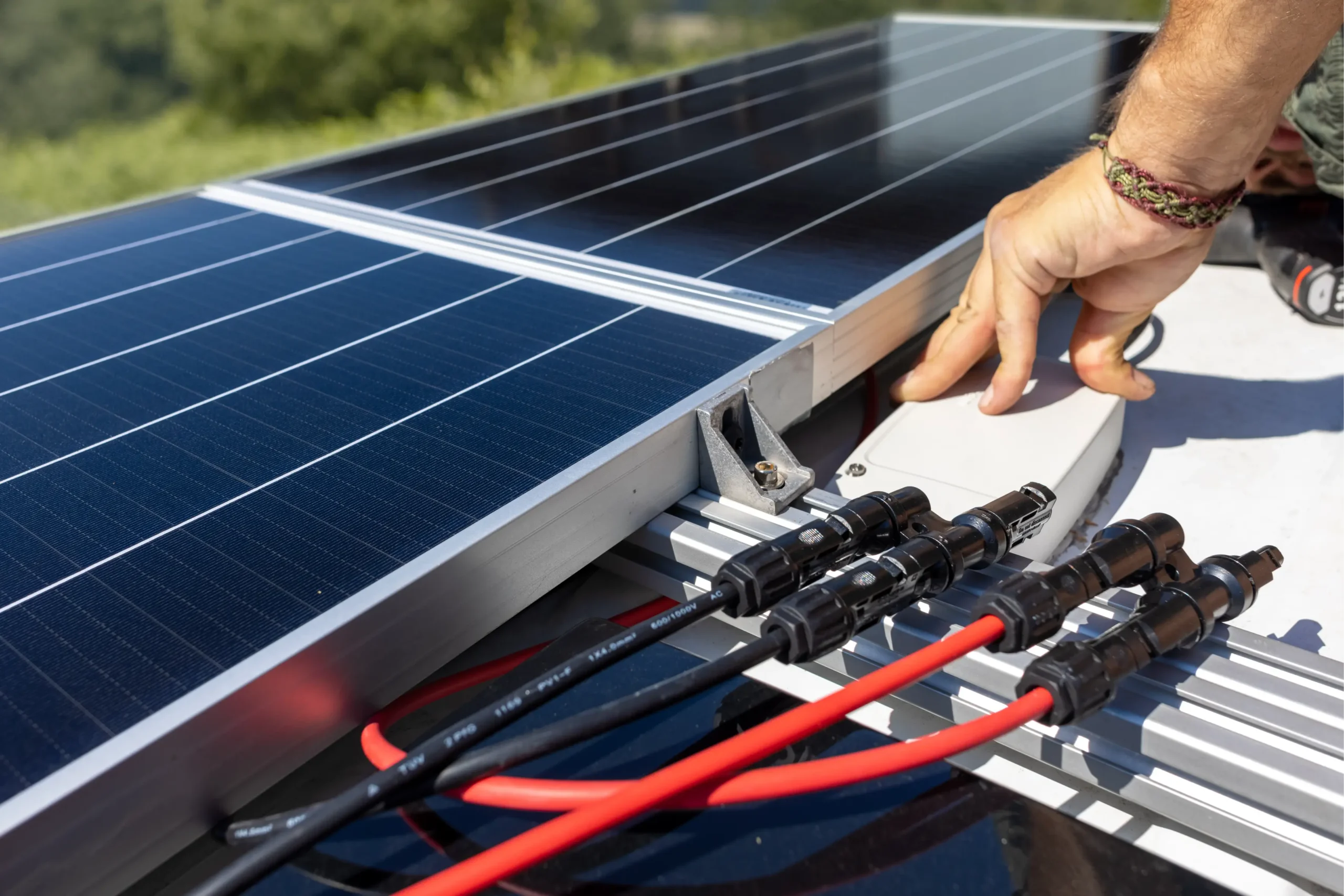
Look at how the system is sized and matched, not just the headline solar wattage or battery amp-hour rating. A 400-watt solar array feeding a 100Ah battery through an undersized charge controller is a worse setup than 200 watts feeding 200Ah through properly sized gear.
If you are shopping for a new unit and energy management is a priority, these questions may be helpful:
- Is the solar standard or an add-on package, and if it is an add-on, who installs it and what warranty covers the install?
- What inverter is installed, what is its continuous and surge wattage, and is it pure sine wave?
- How is the battery bank sized relative to the solar input and expected daily load?
- Does the system include a battery monitor, or is the only readout the four-bar icon on the control panel?
- How does the system prioritize between shore power, generator, solar, and battery when more than one source is live?
If the salesperson can answer those without a long pause, the manufacturer has thought it through. If they can't, the system was likely specced to a price point rather than to a use case.
How does financing factor in?
An RV with a well-integrated power system usually costs more upfront, and the right financing keeps that premium from eating into the monthly budget you actually planned for. A loan structured around how long you plan to keep the rig, not just the lowest possible payment on day one, is what gives the power system room to pay you back through lower generator fuel costs, fewer campground hookup fees, and less reliance on shore power.
My Financing USA works with a variety of credit profiles and finances dealer purchases, private-party purchases, LLC and trust ownership, and full-time RVers. There is no application fee and no prepayment penalty, so getting a quote does not commit you to anything.
For a deeper read on how individual appliances stack up in real-world consumption, the U.S. Department of Energy's appliance energy use breakdowns are a useful reference. Pair that with your actual daily draw list and you have the inputs for a system spec that matches how you actually camp.
Apply for an RV loan with My Financing USA today. The application takes about five minutes. Apply Now
FAQs:
What is the minimum credit score required to qualify for a loan?
We can work with credit scores as low as 550. Our programs are designed to help customers across a wide range of credit situations, including those with past credit challenges.
How long are the loan terms available?
We offer loan terms of up to 20 years, giving you the flexibility to choose a repayment schedule that works best for your budget and goals.
What is the minimum loan amount I can apply for?
Our loan starts at $10k. This applies to both dealer and private party purchases.
What interest rates do you offer?
What types of purchases are eligible for financing?
We finance both dealer and private party purchases and can approve loans for LLCs, trusts, and full-time RVers. We do not finance park models or schoolies..
Can I finance and RV or boat if I'm a full-time traveler?
Yes. We offer financing options designed for full-time RVers and boaters.