

Remote work is now mainstream and RV living as a mobile office is no longer a fringe idea. Sometimes referred to as digital nomads, those who live full-time in their RV are growing in number ache year. Owning your RV can offer a fully functional workspace and summer is the best time to make the leap. In this guide, we’ll show you how to set up your office-on-wheels and how to finance the right rig that makes it possible.
Why Summer 2026 is the Perfect Time to Go Mobile
Longer days means more usable hours to balance time to work with time to explore. Post-pandemic remote work infrastructure is mature and there’s a lot more flexibility out there now. Campground connectivity has improved significantly as demand from remote workers and digital nomads has grown. Not to mention that the months of June and July are peak adventure months and tend to have stable weather windows making traveling much easier.
Choosing the Right RV for the Remote Worker
It’s important to note that different rigs offer different features. Understanding your own needs and the differences and similarities with model styles can help you find a rig that matches your needs and lifestyle:
- Class A and C Motorhomes offer the most space and are a suitable choice for full-timers or extended trips
- Class B Vans: These are the most maneuverable unit type and are easy to park in a variety of sites
- Fifth wheels and travel trailers: Great base-camp setups and separate “office” feel when parked
The best question to ask yourself is where you will mostly be working from. Will you be working from the road or are you planning to be stopped at one site for long periods of time? If you’re planning to move often for example, a Class B could be the right choice, but if you’re planning to have an extended stay, you may opt for a Class A or fifth wheel instead.
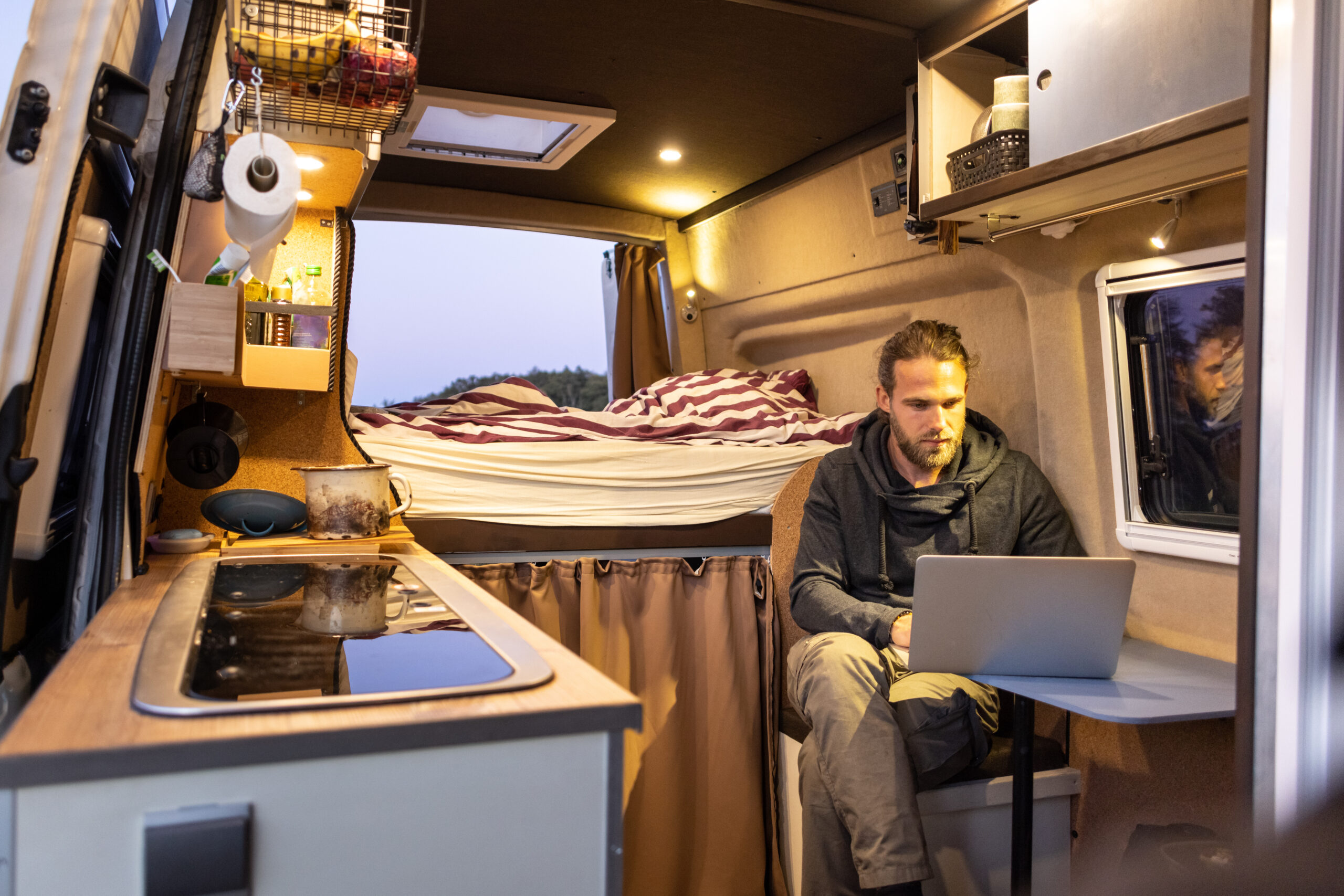
Setting Up a Functional Mobile Office
One of your biggest priorities is securing internet access for a mobile office. Starlink offers consistent, high speed internet nearly anywhere in the continental United States. However, there are hardware considerations to keep in mind when mounting it on an RV (clearance for trees and obstructions that can make connectivity difficult and/or cause damage). Layering your options is also best practice, so staying at sites that have Wifi connections, as well as purchasing cell boosters for your unit is a good idea.
Power is also a factor you should keep in mind. Will your unit have solar panels? Are you staying somewhere with shore power hookups? Do you have battery banks for uninterrupted power? These considerations now will help you later on as you s
On top of power and the internet, it’s also important to think about workspace ergonomics. Is your unit able to have a real desk with capability to hold a computer monitor? You also want your RV to have good climate control, especially for the summer months so that you can stay focused. If you are staying with family or friends in your RV, you also want to factor in noise management, so that you can take meetings and focus during your work day.
Building Your Summer Work-and-Travel Routine
The best part about remote work is getting to spend your evenings adventuring in new places. Time-blocking around daylight can help you make the most of your evenings. If you have a flexible schedule, you can make sure you start working as early as possible, so that most of your daylight hours can be spent experiencing your destination. On top of time-blocking, you also want to plan your routes around connectivity and campsite quality, not just scenery, so you can ensure you have the best conditions for your work day. The “Base Camp” model is a good way to plan because you park for 1-2 weeks, explore, and then move on to a new location. This helps limit travel fatigue and minimizes setup and teardown.
There are several apps out there that are catered to remote workers, as well as communities to get involved in like Harvest Hosts, co-working campgrounds, or RV remote worker Facebook groups.
Real Considerations Before You Go Full Mobile
Going full-time in an RV sounds like a dream, and for a lot of people, it genuinely is. But there's a short list of practical realities worth thinking through before you sign anything.
First up is domicile. When you're living on the road, you still need a legal home state for your driver's license, vehicle registration, and taxes. It's worth a conversation with an accountant or attorney before you commit to the right address.
Health insurance is another one that catches people off guard. If you don’t have an employer plan, you'll want a policy that covers you nationally rather than one tied to a regional network. If your employer has any state-specific requirements around where you're legally allowed to work, that's a conversation to have with HR sooner rather than later as it's a growing issue as remote work policies continue to evolve. And if you've got kids, pets, or a lot of stuff, none of that is a dealbreaker, but each adds a layer of planning. The single best piece of advice for anyone on the fence: rent an RV for a few weeks before you buy. Live in it, work from it, and see how it actually fits your life. It's the fastest way to know whether you're ready, and what kind of rig you actually need.

What it Really Costs and How Financing Makes it Accessible
The RV lifestyle gets a reputation for being expensive, and it definitely is an investment, but when you break it down the numbers, it often can make more financial sense than people expect.
If you're a remote worker who's location-independent, the RV isn't just a vehicle, it's your housing, your office, and your travel budget rolled into one. When you stack a monthly loan payment against what you'd otherwise spend on rent in most mid-size or major cities, the gap closes faster than most people think.
That's where My Financing USA comes in. We specialize in RV financing and work with buyers across a wide range of credit profiles, not just the ones with perfect scores. If you're ready to stop daydreaming about the mobile work life and start actually planning it, applying is the right first step. Apply here and see what you qualify for.
FAQs:
What is the minimum credit score required to qualify for a loan?
We can work with credit scores as low as 550. Our programs are designed to help customers across a wide range of credit situations, including those with past credit challenges.
How long are the loan terms available?
We offer loan terms of up to 20 years, giving you the flexibility to choose a repayment schedule that works best for your budget and goals.
What is the minimum loan amount I can apply for?
Our loan starts at $10k. This applies to both dealer and private party purchases.
What interest rates do you offer?
What types of purchases are eligible for financing?
We finance both dealer and private party purchases and can approve loans for LLCs, trusts, and full-time RVers. We do not finance park models or schoolies..
Can I finance and RV or boat if I'm a full-time traveler?
Yes. We offer financing options designed for full-time RVers and boaters.