Night boating carries added risks like poor visibility, but 2026 tech makes it much safer: thermal cameras spot vessels, swimmers, and wildlife in the dark; radar detects mass and distance to fill thermal's blind spots; AIS shares real-time vessel positions; and COLREGS-compliant LED lighting keeps you visible to others. The article recommends building this tech stack over time (starting with LED lights and a chartplotter) and mentions financing options through My Financing USA to bundle a boat and its accessories into one loan.
Is Night Boating Safe?
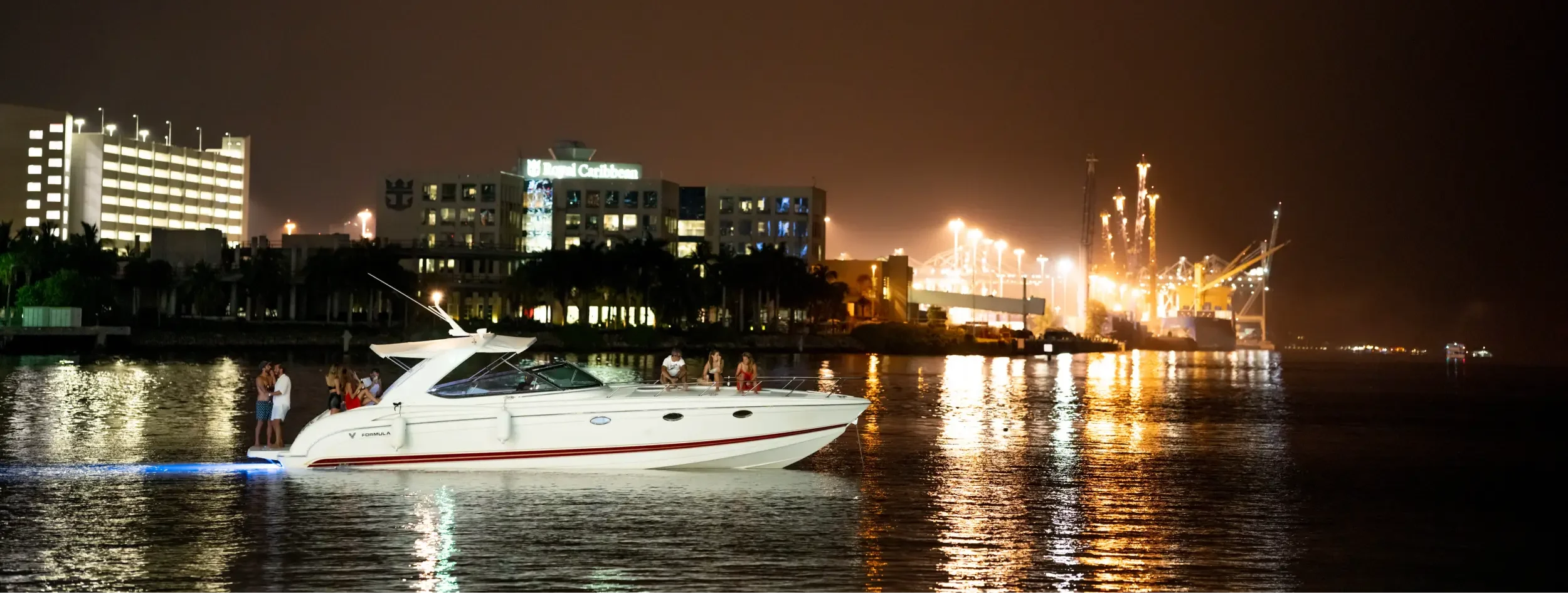
With the summer heating up, more boaters are looking to the evening hours to get some relief from boating during midday sun. It also just offers a different experience. The waterways are quieter, you can do activities like stargazing that you wouldn’t normally be able to do, and entertaining can be more fun. If this lifestyle appeals to you, let’s talk about what the right safety measures look like.
The Risks of Low-Light and Night Boating (And Why Tech Changes the Equation)
It’s no secret that when you boat at night, there will be reduced visibility. It can be harder to read other vessels’ lights and navigation markers and wildlife and debris can be harder to spot. If you’re a new boater or cruising on an unfamiliar waterway, there are even more risks. But don’t let these risks deter you. Managing these risks is easy, thanks to technology. It’s important to also check USCG Navigation rules, regulations in your area, and the specific requirements for your vessel length and type before hitting the water at night. While proper training and licensing is still essential, technology can meaningfully reduce those risks.
What is a Marine Thermal Camera and How Does it Work?
How Marine Thermal Cameras Work
These thermal cameras detect heat signatures rather than light. These can be effective in several situations including fog, rain, and even total darkness. Many boaters will mount them on the bow rail or the T-top. These cameras can not only provide peace of mind, but make evening cruising much more manageable.
What Thermal Cameras Help You Spot
Since thermal cameras are heat detectors, they can spot a variety of different things including other vessels, personal watercrafts, swimmers, kayakers, and paddleboards keeping you and those around you safe. Thermal cameras can also detect wildlife when they are at the surface, but it’s important to note that it cannot detect fish underwater. Instead, the thermal camera can be a great tool to spot birds who are diving for food or fish when they come up to the surface.
Leading Brands and 2026 Options
Marine thermal cameras generally fall into a few camps. Fixed-mount systems from brands like FLIR and Raymarine are designed for permanent installation and integrate directly with your chartplotter. Garmin offers a hybrid approach that blends thermal and standard visible-light imaging, useful if you want one camera doing double duty. For boaters not ready to commit to a fixed system, handheld thermal monoculars have come down considerably in price and can serve as a capable entry point before a full install.
Best Night Boating Navigation Technology: Radar, AIS, and Chartplotters
Chartplotter and Multi-Function Display Advances
Most modern boats have night mode displays, which help to reduce glare. Most displays also have real-time chart overlays, as well as depth and tide integration. Many modern MFDs offer companion app integration for mobile monitoring.
Automatic Identification System (AIS)
Many AIS systems can broadcast and receive vessel positions in real-time, which is critical for safety on the water. These systems are essential when you’re cruising on larger bodies of water or on coasts. These are standard on many mid-range boats and standalone units are reasonably affordable for vessels that don't come equipped.
Marine Radar vs. Thermal Imaging: What's the Difference?
Thermal imaging is a remarkable tool, but it has a blind spot. Thermal reads heat and not everything on the water has a meaningful heat signature. Rain, fog banks, landmasses, and certain debris won't stand out on a thermal display the way a warm engine or a swimmer will. That's where radar earns its place in a well-rounded nav setup.
Marine radar works by sending out radio wave pulses and measuring what bounces back. The result is a real-time picture of your surroundings based on physical mass and distance, not just temperature. Run thermal and radar together on an evening cruise, and you've covered two fundamentally different detection methods with one shared goal: knowing what's around you before you're on top of it.
For most pleasure boaters, the choice comes down to two categories:
Traditional pulse radar has been the standard for decades. It's reliable, widely compatible with existing chartplotters, and tends to offer strong range performance; the tradeoff is a slight lag in target refresh rate and some difficulty picking up smaller, slower objects close to the vessel.
Solid-state (broadband) radar is the newer generation, and it's become increasingly popular with recreational boaters for a few reasons. It powers on instantly, uses significantly less power which is important for boats running on battery banks. It also performs better at short ranges, which is exactly where you need it most when navigating a busy marina, a narrow channel, or a dark anchorage. Brands like Garmin and Navico's Simrad line have made solid-state systems increasingly accessible in the mid-range market.
These two systems aren't competing. Rather, they're complementary. Radar gives you range, bearing, and MARPA target tracking on vessels and landmasses. Thermal gives you the visual confirmation and the ability to identify what that radar return actually is. A blip on radar becomes a kayaker, a piling, or another vessel's bow when you pull up the thermal feed alongside it.

LED Navigation Lighting Upgrades
If you're serious about evening cruising, your navigation lights aren't just a legal requirement — they're one of the primary ways other boaters know you're there. If your vessel is still running older incandescent fixtures, an LED upgrade is one of the simplest, most cost-effective improvements you can make before your next sunset departure.
Modern marine LED navigation lights outperform their incandescent predecessors in nearly every measurable way. They burn significantly brighter, draw a fraction of the power, and last far longer. For boaters running electronics-heavy setups with chartplotters, thermal cameras, and radar all pulling from the same power supply, the reduced draw of LED lighting isn't a minor perk. It's meaningful load management.
Here's something worth knowing before you swap out fixtures: not all LED navigation lights are created equal, and not all of them meet COLREGS standards. The International Regulations for Preventing Collisions at Sea, and their U.S. inland counterparts, specify visibility ranges, arc coverage, and color requirements for your bow, stern, and sidelights based on vessel length and type. When you're shopping for upgrades, look for fixtures that are explicitly COLREGS-certified and rated for your vessel's length class. The U.S. Coast Guard and ABYC (American Boat and Yacht Council) both provide guidance on what compliance looks like, and a quick check before you buy saves you a potentially expensive correction later.
Upgrading to quality LED navigation lights won't make your boat faster or your chartplotter smarter, but it might be the most foundational safety improvement on this list. Every other piece of technology in your evening cruising setup helps you see. Proper lighting ensures other boaters can see you.
What Equipment Do You Need for Safe Night Boating?
You don't need a commercial-grade bridge to enjoy safe, confident evening boating. A well-thought-out setup on a typical 22–28' cruiser or pontoon can cover all the bases without turning your helm into a cockpit from a sci-fi film. Here's what a solid foundation looks like in practice.
A Practical Tech Stack for the Everyday Evening Boater
At the core of most well-equipped recreational builds, you're looking at a few key layers working together:
- A quality MFD (multi-function display) serving as your central hub — chartplotter, GPS, and the integration point for radar and thermal inputs
- Solid-state radar for situational awareness beyond your visible range, especially in fog or on busy waterways
- A marine thermal camera mounted at the bow or helm for low-light detection of vessels, wildlife, and swimmers
- AIS transceiver to broadcast your position and receive traffic data from other equipped vessels
- COLREGS-compliant LED navigation lighting — running lights, stern light, and a reliable anchor light if you're staying out past dark
That's a complete, layered system. It gives you detection, identification, positioning, and visibility without requiring a full refit or a commercial-grade budget.
What to Add First If You're Working With a Budget
Not everyone is starting from scratch, and not everyone needs everything at once. If you're prioritizing, here's a sensible order to build toward that full setup:
- LED navigation lighting: lowest cost, immediate safety return, required by law
- Chartplotter/MFD with GPS: your navigation foundation; everything else integrates here
- AIS transceiver: especially important on coastal water or anywhere with heavy boat traffic
- Solid-state radar: significant step up in situational awareness, particularly in low-visibility conditions
- Thermal camera: the premium layer; transformative for frequent evening boaters, but most impactful once the rest of the stack is in place
If you already have a capable chartplotter on board, you may be closer to a complete setup than you think. Many of these additions are plug-and-play integrations rather than full system replacements.
Financing a Tech-Ready Boat Through My Financing USA
A marine loan can cover the vessel and its equipment together, which means the radar system, the thermal camera, the upgraded MFD can all be part of a single monthly payment rather than a series of out-of-pocket additions you're piecing together over time. You're not choosing between the boat and the tech. You're choosing the whole package from day one.
New vs. Used: What to Expect on the Tech Front
New boats in the 22–28' range increasingly come with integrated electronics packages from the factory like chartplotters, VHF radios, and sometimes AIS already built in. Used boats are a different equation. A well-maintained pre-owned vessel can be an excellent value, but factor in electronics upgrades as part of your overall purchase plan. An older helm isn't a dealbreaker; it's just a line item.
How My Financing USA Works
My Financing USA works with a national network of lenders to find competitive rates for boat buyers across a wide range of credit profiles. You apply once, and we go to work matching you with the right lender for your situation.
Check your rate and start your application.
FAQs:
What is the minimum credit score required to qualify for a loan?
We can work with credit scores as low as 550. Our programs are designed to help customers across a wide range of credit situations, including those with past credit challenges.
How long are the loan terms available?
We offer loan terms of up to 20 years, giving you the flexibility to choose a repayment schedule that works best for your budget and goals.
What is the minimum loan amount I can apply for?
Our loan starts at $10k. This applies to both dealer and private party purchases.
What interest rates do you offer?
What types of purchases are eligible for financing?
We finance both dealer and private party purchases and can approve loans for LLCs, trusts, and full-time RVers. We do not finance park models or schoolies..
Can I finance and RV or boat if I'm a full-time traveler?
Yes. We offer financing options designed for full-time RVers and boaters.