many boaters assume sustainability just means adding more to that cost. The truth is though, in most cases, small habit changes on the water add up to real savings and a healthier marine environment. You don’t have to choose between enjoying the water and protecting it.
Fuel Efficiency on the Water
Fuel is one of the biggest ongoing costs of boat ownership, and it’s also one of the easiest places to make a dent in your spending with a few simple habit changes.
Start with your throttle. Running at full speed might feel satisfying, but it can burn through fuel at a disproportionate rate. Most boats have a sweet spot where you’re getting solid speed without draining the tank. Learning what that range is on your specific boat and sticking to it can make a noticeable difference over the course of the season.
Trim is another one that’s easy to overlook. A properly trimmed boat sits efficiently in the water, reducing the drag and letting the engine work less hard to maintain speed. Getting comfortable with your trim adjustment is one of the simplest things you can do to stretch every tank of fuel further.
Engine maintenance plays into this too. A dirty fuel filter, worn spark plugs, or a fouled propeller all force your engine to work harder than it needs to. Keeping up with routine maintenance isn’t just good for the environment, it's good for your wallet. A well-tuned engine burns cleaner and costs less to run.
Small adjustments, consistent habits, and a little attention to how your boat is running can add up to real savings by the end of the summer.
Boat Maintenance That’s Better for the Environment
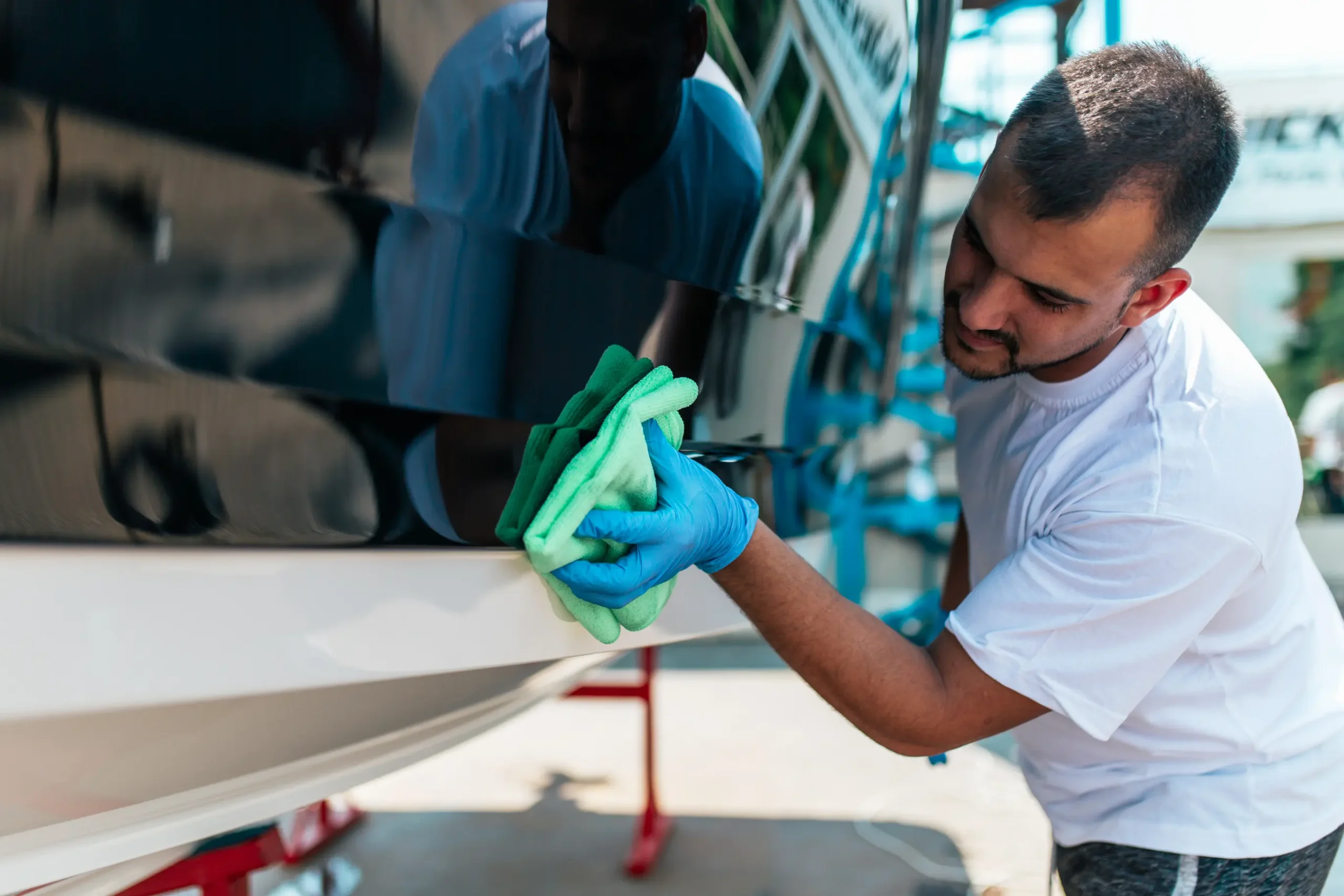
Keeping your boat in good shape isn't just about performance, it's one of the most impactful things you can do for the water you boat on. The good news is that environmentally responsible maintenance and cost-effective maintenance are largely the same thing.
Start with your hull. Traditional antifouling paint can contain harsh chemicals that leach into the water over time. Newer eco-friendly alternatives have come a long way in terms of effectiveness and are worth exploring the next time your hull is due for a fresh coat. A clean and well-maintained hull also reduces drag, which ties directly back to fuel efficiency.
Cleaning products are another easy swap. Many boat soaps contain chemicals that can be harmful to marine life. Biodegradable, phosphate-free alternatives are widely available, can be comparably priced, and do the job just as well. It’s a small change that adds up across every wash.
Fluid disposal is where a lot of boaters unknowingly cause the most damage. Used oil, fuel, and bilge water should never go overboard. Many marinas have designated disposal stations for these. Staying on top of fluid changes also means catching small engine issues before they turn into expensive repairs.
The through line across all of it is the same: a well-maintained boat is a cleaner boat, a more efficient boat, and a less expensive boat to own over time.
Responsible Anchoring and Navigation
How and where you anchor matters more than most boaters realize, both for the health of the waterway and for staying out of trouble on the water.
When it comes to anchoring, bottom composition is worth paying attention to before you drop. Seagrass beds and coral areas are easily damaged by anchors and anchor chains dragging across them. Sandy bottoms are generally the safest bet. Taking a moment to check your surroundings before anchoring is a small habit that makes a real difference over time.
Navigation habits play a role too. Running at high speeds in shallow areas stirs up sediment, disrupts wildlife, and accelerates shoreline erosion. No-wake zones exist for good reason, and respecting them, even when enforcement isn't visibly present, is part of being a responsible boater. Slowing down in sensitive areas also happens to be easier on your hull and your fuel tank.
Mooring buoys are another option worth knowing about where they're available. Using a designated buoy instead of anchoring eliminates bottom contact entirely and is the preferred approach in many protected marine areas.
The common thread here is awareness. Knowing what's beneath and around you before you anchor or throttle up takes very little extra effort and goes a long way toward keeping the waterways healthy for everyone who uses them.
The Bigger Picture: Why it Matters for Boaters
Eco-friendly boating is something that benefits everyone including the fish, the coral, the shoreline, and every boater who wants to keep enjoying them. Waterways that are well-preserved stay open and areas that suffer from neglect or damage are more likely to face restrictions or reduced access over time. The boating community has a real stake in the health of the water it recreates on, and these mindful habits are a meaningful part of protecting that access long term.
There's also something to be said for the experience itself. Clean water and well-maintained shorelines make for better boating. The effort to protect them is also an investment in every future trip you take.
Being a responsible boater and being a smart boater are more or less the same thing. The habits that reduce your environmental footprint on the water tend to be the same ones that lower your fuel costs, extend the life of your boat, and keep your maintenance bills manageable. None of it requires a major overhaul, just a little more intention behind the decisions you're already making.
If you're ready to get on the water, My Financing USA can help you get there. Explore your boat financing options today and find a loan that fits your budget and your lifestyle.
FAQs:
What is the minimum credit score required to qualify for a loan?
We can work with credit scores as low as 550. Our programs are designed to help customers across a wide range of credit situations, including those with past credit challenges.
How long are the loan terms available?
We offer loan terms of up to 20 years, giving you the flexibility to choose a repayment schedule that works best for your budget and goals.
What is the minimum loan amount I can apply for?
Our loan starts at $10k. This applies to both dealer and private party purchases.
What interest rates do you offer?
What types of purchases are eligible for financing?
We finance both dealer and private party purchases and can approve loans for LLCs, trusts, and full-time RVers. We do not finance park models or schoolies..
Can I finance and RV or boat if I'm a full-time traveler?
Yes. We offer financing options designed for full-time RVers and boaters.