Smart RV packing comes down to zone-based storage and weight distribution, not cramming in more gear. Set up your storage system once, using the strategies below, and every trip after gets easier.
Summer has a way of making spontaneous travel feel possible again. There’s nothing like being able to disconnect and spend time away from the hustle and bustle of daily life all while seeing new places with your family and friends. It’s great to be able to relax and rejuvenate.
But clutter can derail more road trips than bad weather or detours ever could. The dream of the open road tends to collide with the reality of a packed-too-full RV, gear sliding around in the cabin, and twenty minutes spent digging through a storage bay for a phone charger. The good news is that almost all of it is preventable with a little upfront strategy.
Here’s a practical guide to packing and storing more efficiently. It’s one you can come back to no matter the time of year.
Why Does Packing Strategy Matter More in an RV?
Packing for an RV trip isn’t quite like packing a suitcase or loading up the trunk of a car. Every item you bring takes up space that’s also doing double duty as living space, and every pound you add affects how the rig handles on the road. You’re not just packing for a trip, you’re choosing how your living space will function and that’s an important thing not to overlook.
Weight distribution in particular is worth taking seriously. An unevenly loaded RV can affect towing stability, tire wear, and fuel efficiency, especially over long highway stretches. The goal isn’t to obsess over every ounce, but to be intentional: heavier items low and centered, fragile or frequently used items accessible, and everything else stowed in a way that won’t shift once you’re moving.
How Should You Plan Before Packing Your RV?
A few minutes of planning before you ever open a storage bay saves hours of frustration later.
Build a trip-length checklist. A weekend trip and a month-long haul call for very different packing lists. Keep a master list and trim it down based on duration rather than starting from scratch every time. This will save you time and energy.
Follow the “one in, one out” rule. Before adding a new gadget, tool, or outfit to the RV, ask what’s coming out (Bought a new camping chair? Get rid of the old one). This single habit does more to prevent long-term clutter than any organizer ever will.
Use a simple inventory system. Whether it’s a notes app, a shared spreadsheet, or a packing app, knowing what’s already on board prevents the classic mistake of buying a duplicate can opener three trips in a row.
What Are the Best RV Storage Zones to Maximize Space?
Most RVs have more storage potential than they appear to at first glance; it’s just a matter of using it well. Finding the right storage solutions can go a long way.
- Underbelly and exterior bays. Best for bulky, weather-resistant items like leveling blocks, hoses, tools, and outdoor gear that doesn’t need climate control.
- Vertical space. Over-cab storage, closet risers, and stackable bins make use of the space most people overlook. You can often double your storage space by getting these items.
- Multi-use furniture. Storage ottomans, bench seating with lift-up lids, and under-bed risers turn passive square footage into active storage.
- Door and wall organizers. Over-the-door shoe organizers, magnetic strips, and adhesive hooks add storage without taking up floor space or requiring permanent modifications.
What Are the Best RV Kitchen Storage Hacks?
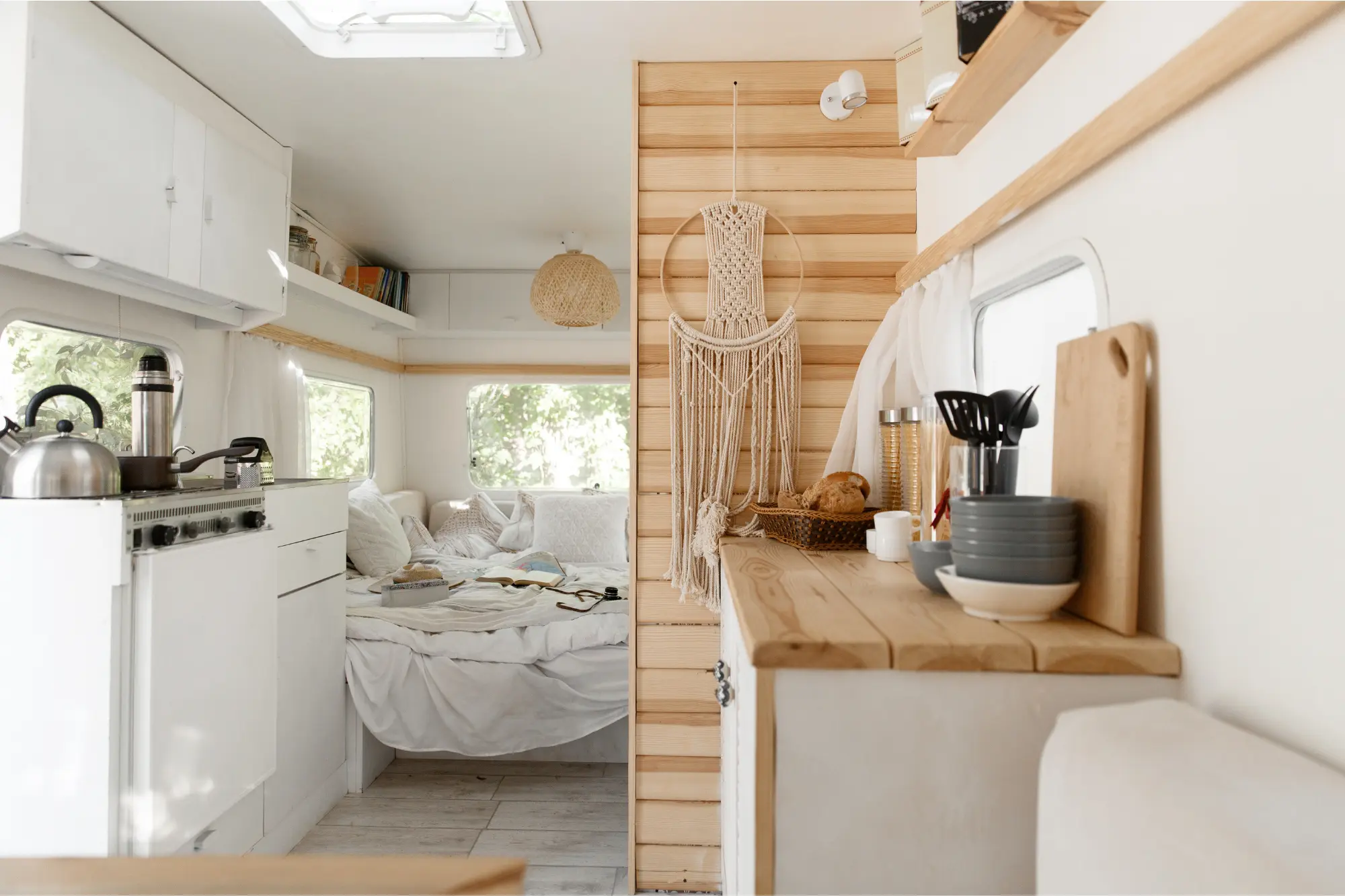
RV kitchens reward creativity. A few small changes go a long way:
- Collapsible cookware and measuring cups that flatten for storage
- Stackable, uniform containers instead of mismatched Tupperware
- Tension rods installed inside cabinets and the refrigerator to keep pans and lids upright and from sliding during transit
- Magnetic strips for knives or metal utensils, freeing up drawer space

How Should You Pack Clothing for RV Travel?
Clothing is often where new RVers overpack the most. A few adjustments help:
Packing cubes keep clothing compressed and organized by category or by person, making it easy to grab what you need without unpacking everything else. This is great especially when you’re traveling with kids.
Capsule wardrobes, a small, mix-and-match set of clothing, work especially well for RV life, where laundry access is more frequent than people expect.
Plan for laundry on the road. Many campgrounds and travel stops have facilities, so packing for a week rather than a month of outfits is usually enough.
What Are the Must-Have Summer RV Road Trip Essentials?
Since this is peak road trip season, it’s worth calling out a few warm-weather specific items that tend to get left behind:
- Cooling gear: portable fans, reflective window covers, and 12-volt coolers for keeping drinks and snacks cold without running down the battery
- Water sports equipment storage: dry bags and exterior racks for paddleboards, tubes, or snorkel gear
- Bug protection: screens, repellents, and citronella options that won’t overpower a small cabin space
- This is the kind of section worth revisiting each season, swap it out for cold-weather essentials in the winter or shoulder-season packing tips in spring and fall, and the rest of the post holds up year-round.
How Do You Store Bikes, Kayaks, and Outdoor Gear in an RV?
For RVers who travel with bikes, kayaks, fishing gear, or powersports equipment, storage strategy becomes even more important. Exterior racks, hitch-mounted carriers, and dedicated toy storage compartments (common in toy hauler models) keep gear secure and out of the living space. If your current setup is feeling tight for the gear you want to bring along, it might be worth exploring whether a different RV configuration, or financing an upgrade, fits where your travel plans are headed.
What Are the Most Common RV Packing Mistakes?
A few habits trip up even experienced RVers:
- Overpacking “just in case” items that never get used but always get hauled. These take up unnecessary space. After every trip, do a quick glance throughout your unit to see what you used and what you didn’t. Remove the items you didn’t.
- Ignoring weight limits, which can affect handling, tire wear, and overall safety.
- Failing to balance weight distribution across both sides and axles of the rig, rather than just minimizing total weight.
Hit the Road Lighter
A well-packed RV isn’t about having less, it’s about having exactly what you need, exactly where you can find it. Get the storage system right once, and every trip after that gets a little easier, leaving more time for the part that actually matters: the open road, the next stop, and wherever the trip takes you next. When your storage setup is right, you can travel stress-free.
Ready to hit the road? Apply for financing with My Financing USA today.
FAQs:
What is the minimum credit score required to qualify for a loan?
We can work with credit scores as low as 550. Our programs are designed to help customers across a wide range of credit situations, including those with past credit challenges.
What’s the best way to organize a small RV kitchen?
Use collapsible cookware, stackable uniform containers, and tension rods inside cabinets to keep items from sliding during transit. Magnetic strips for knives and utensils free up drawer space in tight galleys.
Do I need special storage for kayaks or bikes on an RV?
Yes, exterior racks, hitch-mounted carriers, or a toy hauler’s dedicated compartment keep bulky gear secure and out of your living space. Toy hauler models are built specifically for this kind of equipment.
How much weight can I safely pack in my RV?
Check your RV’s Gross Vehicle Weight Rating (GVWR) and Cargo Carrying Capacity (CCC), both listed on the manufacturer’s weight sticker. Loading beyond CCC affects handling, tire wear, and safety, so weigh your rig at a certified scale before a long trip if you’re unsure.
How long are the loan terms available?
We offer loan terms of up to 20 years, giving you the flexibility to choose a repayment schedule that works best for your budget and goals.
What is the minimum loan amount I can apply for?
Our loan starts at $10k. This applies to both dealer and private party purchases.
What interest rates do you offer?
What types of purchases are eligible for financing?
We finance both dealer and private party purchases and can approve loans for LLCs, trusts, and full-time RVers. We do not finance park models or schoolies..
Can I finance and RV or boat if I'm a full-time traveler?
Yes. We offer financing options designed for full-time RVers and boaters.