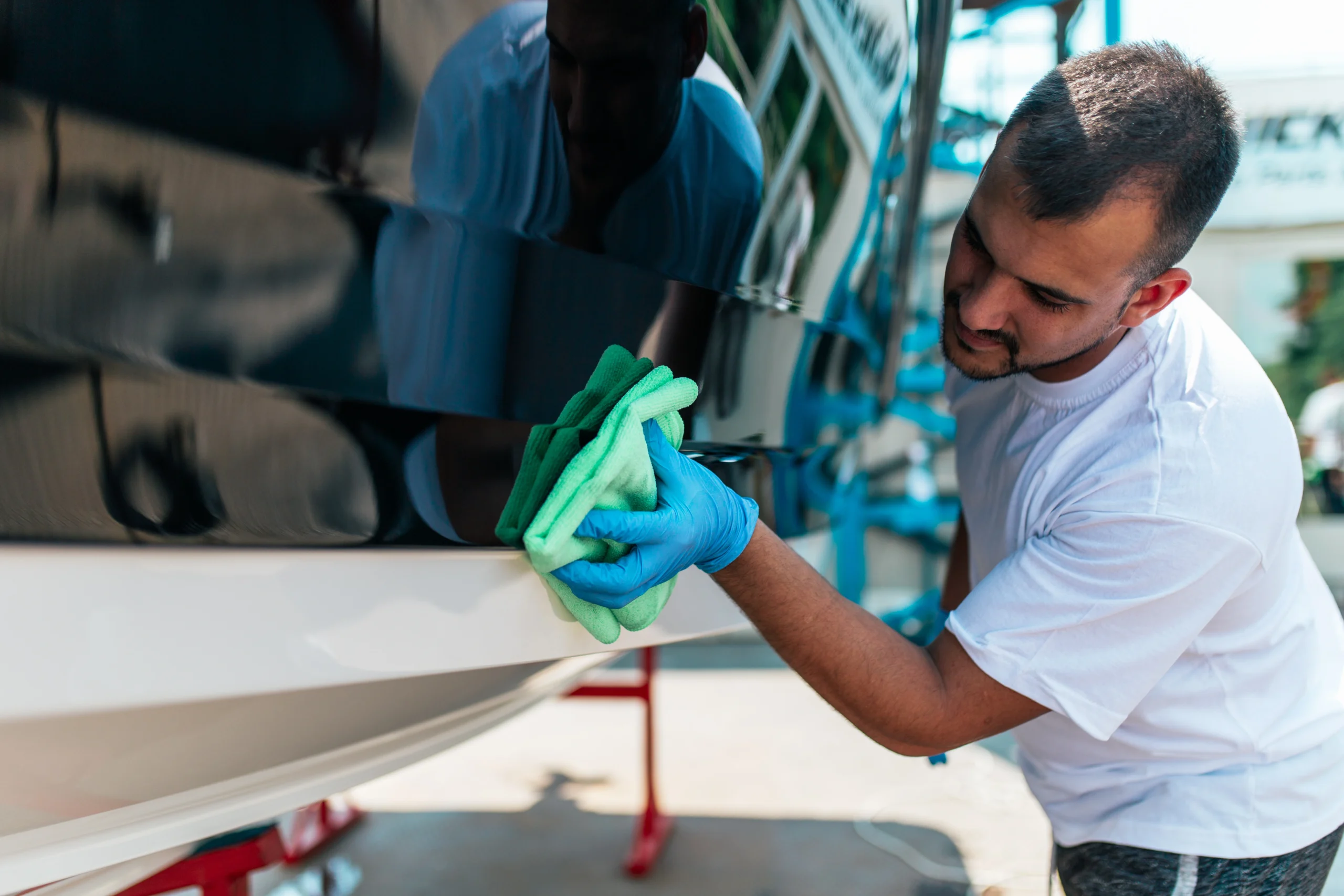
Mid-season salt and algae buildup slows your boat down, burns more fuel, and can hurt resale value. However, a freshwater rinse, boat-safe cleaner, and soft-bristle scrub restores performance in most cases. Buildup isn't just cosmetic; it drags on fuel efficiency, speed, and handling, and it can cost you at resale time if you're planning to upgrade.
Why Do Boat Hulls Attract Salt and Algae Mid-Season?
Warmer summer water temperatures accelerate algae growth, and in saltwater environments, mineral residue builds up on the hull as water evaporates. Freshwater boats tend to see more algae growth and grime, while saltwater boats deal with salt crust, barnacles, and other marine growth. Boats kept in the water full-time, rather than trailered, are especially vulnerable to buildup. This isn't a sign of neglect but simply happens with regular use and isn't something to worry about.
How Can You Tell If Your Boat Hull Needs Cleaning?
A hazy or dull gelcoat is usually the first visual sign your hull needs attention. Look for a green or brown film below the waterline, or a rough texture when running a hand along the hull.
On the water, sluggish acceleration, a lower top speed than usual, or increased fuel consumption on familiar routes can also point to buildup. A quick visual check during a routine haul-out or while the boat's on a lift is an easy way to confirm. This is routine maintenance, not cause for concern — staying proactive is what matters.
How Do You Clean Salt and Algae Off a Boat Hull?

The cleaning approach depends on what you're removing. Here's how the two processes compare side by side:
| Step | Removing Salt Residue | Removing Algae Growth |
|---|---|---|
| 1 | Rinse thoroughly with fresh water to loosen surface salt | Identify the growth type. Is it a light film or established buildup? |
| 2 | Apply a boat-safe hull cleaner formulated for salt deposits (avoid household cleaners, which can damage the gelcoat) | Use a marine-safe algaecide or vinegar-water solution for light film; a scrub brush or careful pressure washing for heavier growth |
| 3 | Work in sections with a soft-bristle brush, following the hull's grain | For boats stored in the water, apply antifouling paint and track when reapplication is due |
| 4 | Focus on the waterline and metal fittings, where salt corrosion concentrates | Rinse and inspect for pitting or damage that may have been hidden under the growth |
| 5 | Rinse again and dry completely to prevent new residue from forming |
Saltwater boaters may need to repeat this every few weeks during peak season, not just once a year, depending on storage and how often the boat is used.
How Do You Protect a Boat Hull After Cleaning?
A wax or polish applied after cleaning creates a smoother, slicker surface that resists future buildup. A treated hull reduces drag, which helps performance if you're planning to sell and upgrade. Several marine-grade protective coatings are worth considering if you want extra buildup resistance without a full haul-out. This doesn't need to be expensive or time-consuming: a basic wax application can make a measurable difference in glide and fuel use.
Does a Dirty Hull Affect Boat Resale Value?
Yes, hull condition shapes both what a buyer thinks of your boat and what a surveyor finds during inspection. Before a potential buyer asks about engine hours or checks the electronics, they'll look at the hull first, and it sets the tone for how they view the rest of the boat. Algae staining or crusted salt residue suggests neglect, even if the rest of the boat has been well cared for, and that impression is hard to shake.
The same goes for marine surveys. Surveyors take hull condition seriously, since buildup and staining can mask underlying issues like pitting, blistering, or early corrosion around fittings. A hull kept clean throughout the season is easier to inspect and easier to trust which can mean a smoother survey and a stronger negotiating position at sale time.
Keeping a simple maintenance log as you go, like cleanings, receipts for cleaners or waxes, a few before-and-after photos, becomes a real selling point later, giving buyers proof the boat has been cared for consistently rather than cleaned up right before listing.
How Do You Build a Mid-Season Boat Maintenance Habit?
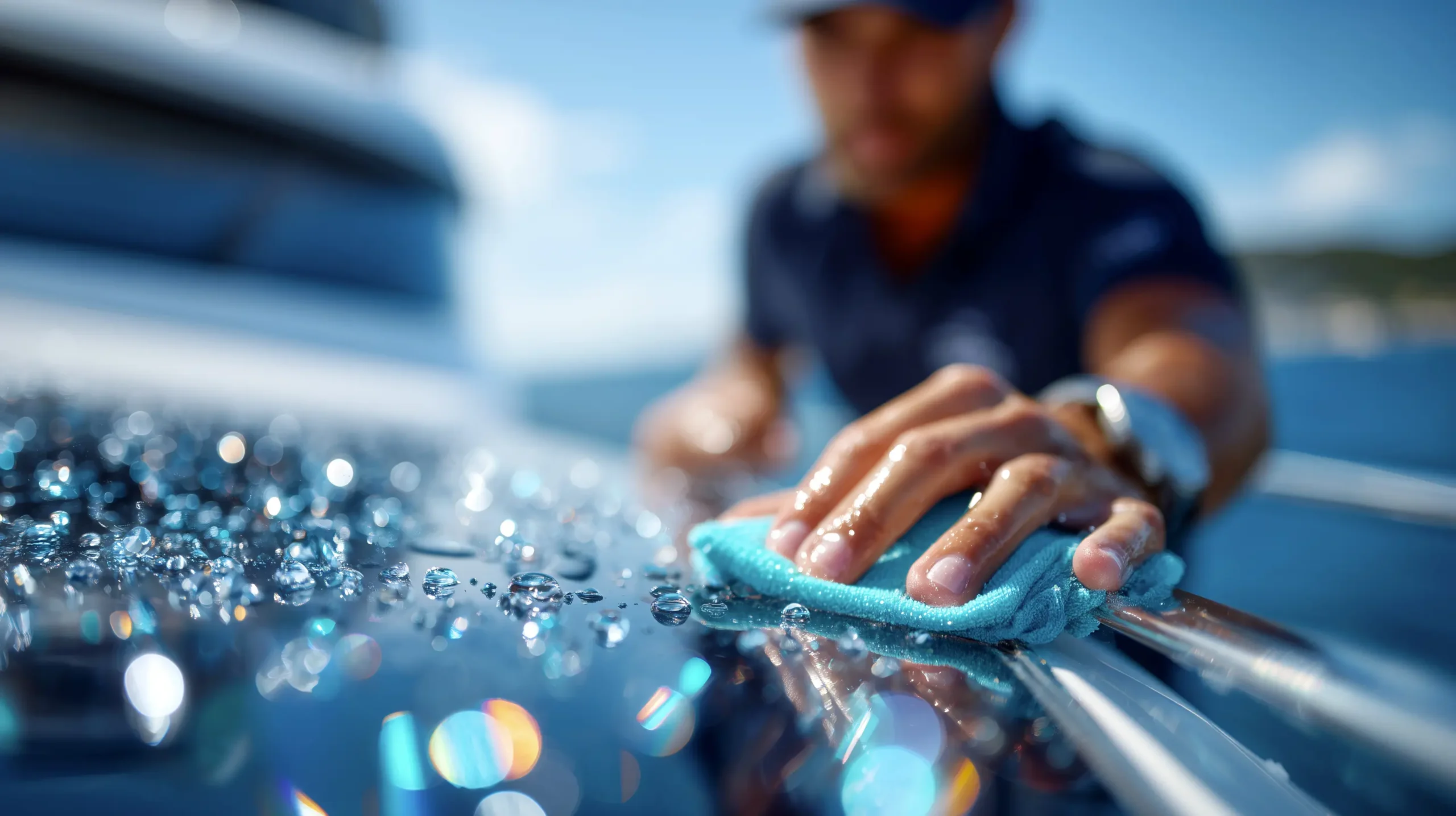
Creating a routine like a quick rinse after every outing, deep clean every few weeks during peak season, and a full inspection at the season's midpoint prevents the kind of heavy buildup that requires costly professional treatment later. A clean hull isn't just about looks. It protects the boat's performance and value overall. Check out our complete boat maintenance guide here.
How often should you clean a saltwater boat hull?
Most saltwater boats need a rinse after every outing and a full hull cleaning every two to three weeks during peak season, depending on storage type and usage. Boats kept in the water year-round need it more often than trailered boats.
Can you clean a boat hull while it's still in the water?
Yes, light salt and algae buildup can often be cleaned in the water using a soft-bristle brush or scrub pad, though heavier growth typically requires a haul-out for proper access and antifouling paint reapplication.
Mid-season hull care is a modest time investment that protects how your boat runs and what it may be worth in the future. Have questions about financing or boat ownership? We can help!
FAQs:
What is the minimum credit score required to qualify for a loan?
We can work with credit scores as low as 550. Our programs are designed to help customers across a wide range of credit situations, including those with past credit challenges.
How long are the loan terms available?
We offer loan terms of up to 20 years, giving you the flexibility to choose a repayment schedule that works best for your budget and goals.
What is the minimum loan amount I can apply for?
Our loan starts at $10k. This applies to both dealer and private party purchases.
What interest rates do you offer?
What types of purchases are eligible for financing?
We finance both dealer and private party purchases and can approve loans for LLCs, trusts, and full-time RVers. We do not finance park models or schoolies..
Can I finance and RV or boat if I'm a full-time traveler?
Yes. We offer financing options designed for full-time RVers and boaters.