
Quick Navigation
- What Is an RV?
- What Is a Camper?
- What Is a Camper Van?
- What Is a Motorhome?
- Which Vehicle Is Right for Me?
When looking for a vehicle to stay overnight in for camping trips or road trips, you can choose between campers, RVs and motorhomes. All three may sound the same, but they are distinct types of vehicles. The right vehicle for you depends on where you plan to travel and what you plan to do.
What Is an RV?
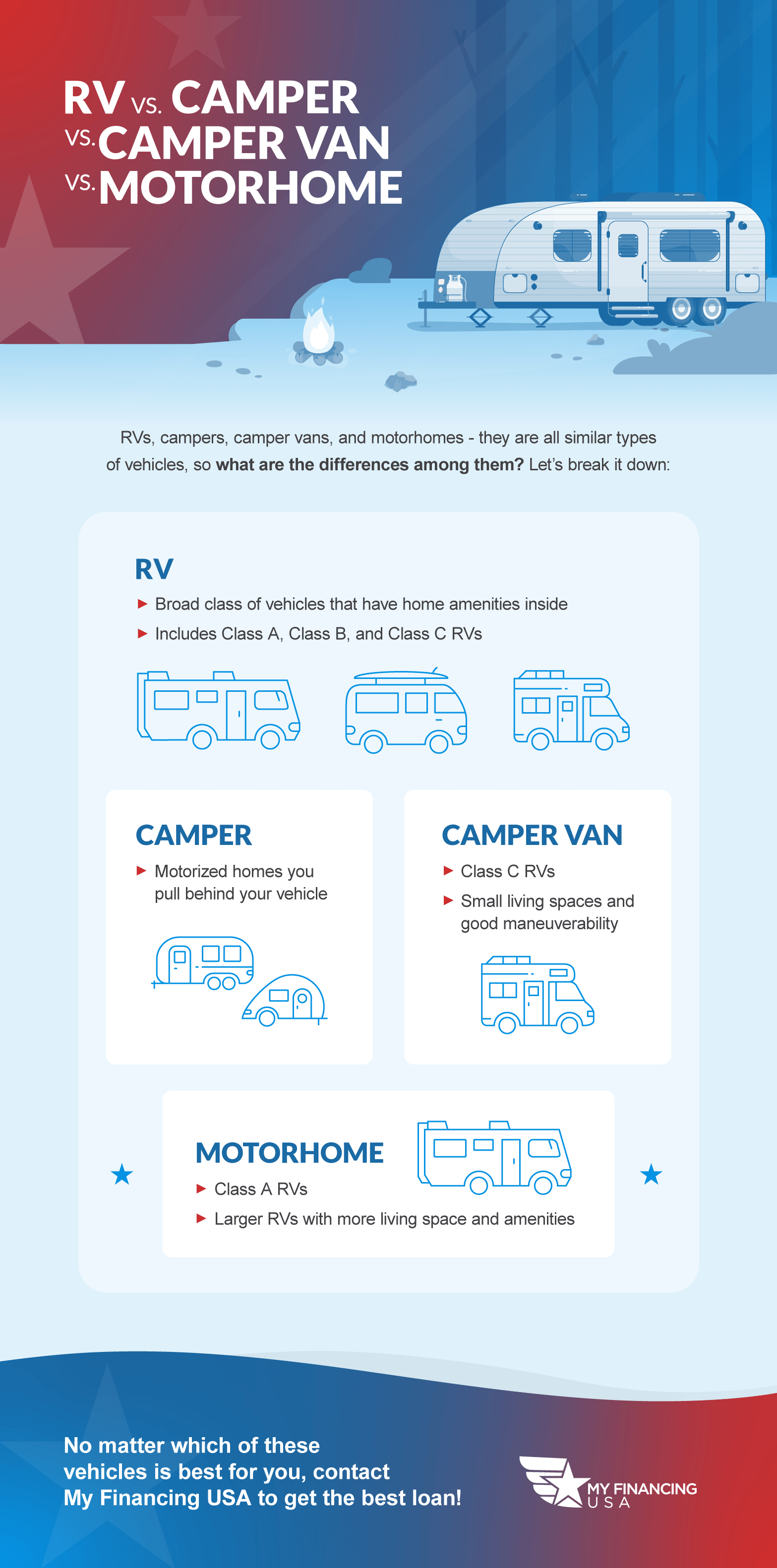
RV stands for recreational vehicle, and it refers to a broad class of vehicles that includes many of the amenities of home. The word "RV" encompasses anything people use for travel and staying overnight.
There are three main types of RVs:
Class A
A Class A RV is a vehicle that usually includes a bathroom, kitchen and bedroom, ranging from a basic to luxury interior.
Class B
A Class B RV vehicle that looks like a van and costs less than a Class A version, which is generally bigger.
Class C
A Class C RV vehicle with a section that hangs over the front cab, usually offering a place to sleep. Generally considered the point between Class A and B vehicles.
What Is a Camper?
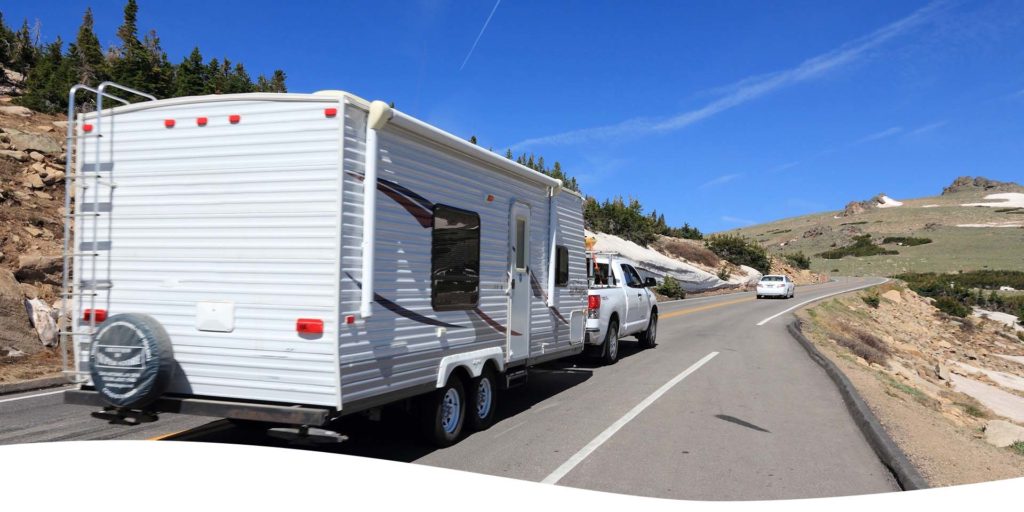
Campers include motorized homes that trail behind a truck or car. You can tow them to your destination and pop them up to access the living space. You may also hear them called trailers or pop-ups.
What Is a Camper Van?
Camper vans are small RVs, or Class C vehicles, with smaller living spaces and greater maneuverability. You can drive a camper van to your destination in a national park or a mountain overlook, whereas you may have trouble navigating a larger motor vehicle to those places.
What Is a Motorhome?
A motorhome is a type of RV. Generally, people referring to motorhomes mean Class A RVs, the larger, more luxurious form of mobile transportation. They offer more living space than other types of RVs and are larger, making them feel more spacious and livable. Sometimes you need a special license to drive a motorhome, depending on the size.
Which Vehicle Is Right for Me?
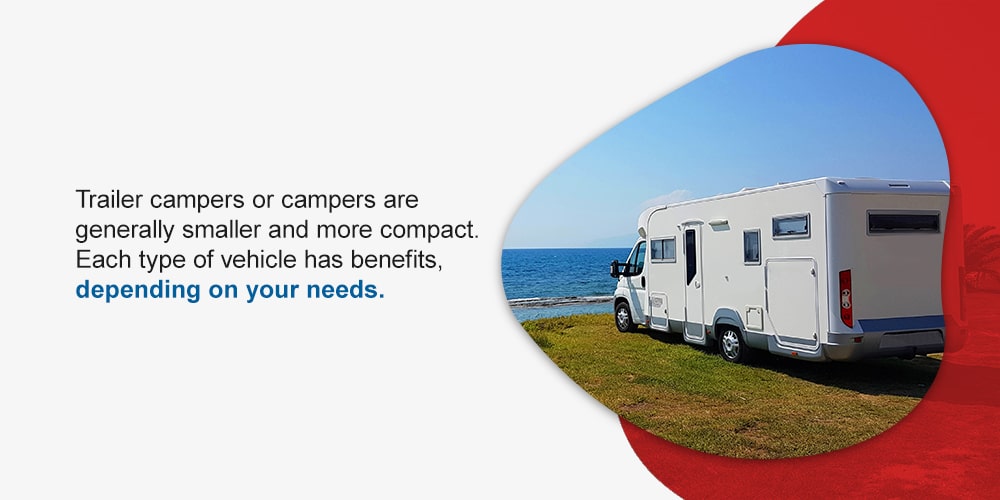
The main difference between RVs, motorhomes and campers is size. RVs include bigger types of vehicles, such as motorhomes. Trailer campers or campers are generally smaller and more compact. Each type of vehicle has benefits, depending on your needs.
For instance, if you want to go on a more extended trip, you may prefer the extra space, that an RV or motorhome can offer. A camper may be a more affordable and practical solution if you're taking a weekend trip closer to home. RVs and motorhomes are a more considerable investment and deliver more of the comforts of home.
Get an RV, Trailer Camper or Motorhome Today With Help From My Financing USA
No matter what type of vehicle you want to purchase, My Financing USA can assist you. Learn more about our camper loans and financing or motorhome loans and financing, then apply for an RV or camper loan today.
Additional Resources on RVs & Campers:
- How to Dewinterize Your RV or Motorhome
- Camper Maintenance Guide
- Camper Winterization Guide
- What Is a Truck Camper?
- Guide to RV Camping
FAQs:
What is the main difference between an RV, camper, and motorhome?
An RV is a general term that covers a variety of recreational vehicles. A motorhome is a self-powered RV with its own engine, while a camper is typically a towable unit that requires a separate vehicle for transportation.
Is a camper the same as a motorhome?
No. A camper is generally a towable recreational vehicle, while a motorhome is a drivable RV with built-in living quarters and an engine. Motorhomes typically offer more convenience, while campers can provide greater flexibility once set up at a campsite.
What are the different types of motorhomes?
Motorhomes are commonly divided into three categories: Class A, Class B, and Class C. Class A motorhomes are the largest and most luxurious, Class B motorhomes are compact and van-based, and Class C motorhomes offer a balance between size, comfort, and maneuverability.
Do you need a special license to drive a motorhome?
In many states, a standard driver's license is sufficient to operate most motorhomes. However, larger motorhomes may require a special license or endorsement depending on state regulations. Always check the requirements where you live and where you plan to travel.
Which is better for beginners: RV, camper, or motorhome?
The best choice depends on your comfort level and travel goals. Many beginners prefer smaller campers or Class B motorhomes because they are easier to drive, tow, park, and maintain than larger RVs.
Are campers cheaper than motorhomes?
In most cases, campers are more affordable than motorhomes because they do not include an engine or driving components. They can also have lower maintenance costs, making them an attractive option for budget-conscious travelers.
Can you live full-time in an RV or motorhome?
Yes. Many people choose to live full-time in RVs and motorhomes. Larger motorhomes and RVs often provide more storage, sleeping space, and residential-style amenities that support long-term living.
What should I consider when choosing between a camper and a motorhome?
Consider your budget, travel frequency, towing capability, desired amenities, maintenance costs, and preferred driving experience. Campers may offer greater flexibility at your destination, while motorhomes provide the convenience of having transportation and living space combined in a single vehicle